How to Set Up a $50/Week DCA on Binance and Bybit (and the Honest Math Behind It)
Most guides skip the awkward truth: a lump sum usually beats dollar-cost averaging on paper. So here’s the honest version first — why you should still DCA, then the five-minute setup on Binance (Auto-Invest) and Bybit (Recurring Buy), weekly vs monthly, which coins, how to earn yield on it, and the mistakes that quietly kill a plan. As of June 2026.
- A $50/week DCA is a fixed $50 of crypto bought automatically on a schedule. Because the dollar amount is fixed, it buys more coins when the price is low and fewer when high — smoothing your average entry without watching charts.
- The honest part first: historically a lump sum beats DCA about two of three times (Vanguard, ~2.3% over a decade). DCA’s real edge is behavioural — you don’t have a lump sum, you have a paycheck, and an automated plan keeps you buying through the crashes you’d flee.
- It’s built in on both exchanges: Binance Auto-Invest (from ~$1, with an option to auto-earn via Simple Earn) and Bybit Recurring Buy. Scheduling is free; you pay normal fees on each buy.
- Weekly vs monthly barely matters — match it to payday. For coins, stick to one to three you believe in (BTC, ETH); DCA into a dying memecoin just averages toward zero.
- The cardinal sin is stopping in a crash — exactly when your fixed $50 buys the most. Size it to survive a 50% drop, fund it reliably (Bybit cancels after three misses), and move long-term holdings to your own wallet.
- This guide covers the honesty, the step-by-step on both exchanges, frequency, coins, the earn-yield trick, and the mistakes that kill a plan. Not investment advice.
1. First, the awkward truth about DCA
2. What a $50/week DCA actually does
3. Binance Auto-Invest: the exact taps
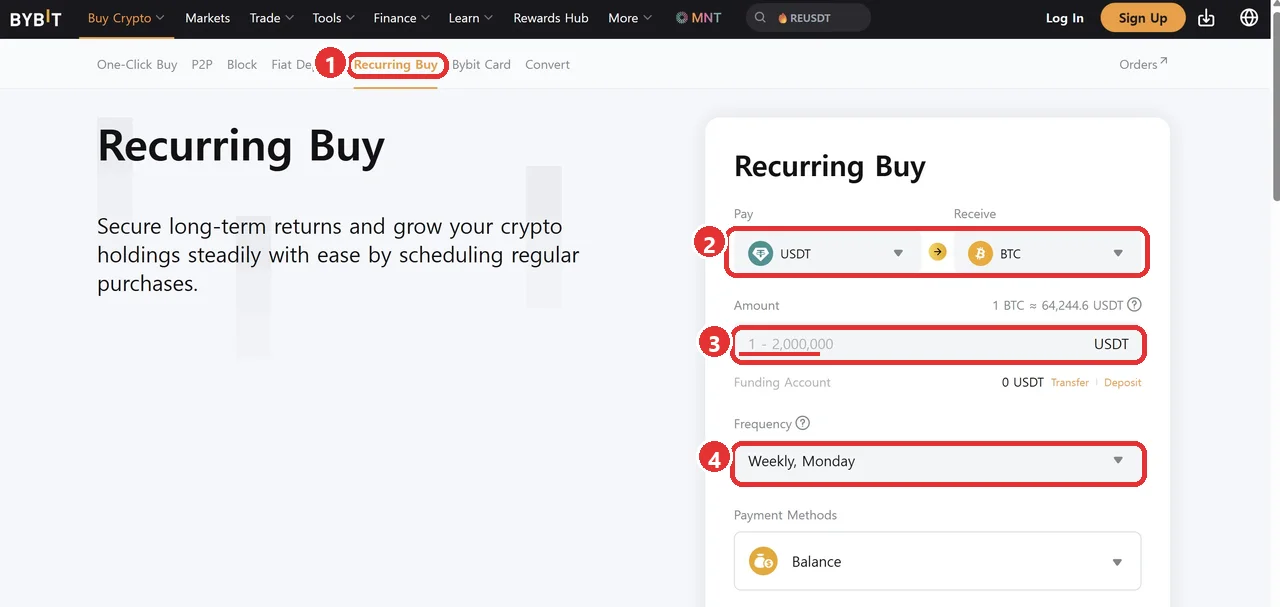
4. Bybit Recurring Buy: the exact taps
5. Weekly or monthly, and what to buy
6. The free upgrade: make it earn while it stacks
7. Six ways people kill their own DCA
8. Where to run it, and the bottom line
1. First, the awkward truth about DCA
Let’s start where most “set up a DCA” guides don’t dare: dollar-cost averaging is probably not the way to squeeze the most money out of a given pile of cash. Vanguard ran the numbers across decades of US, UK and Australian markets, and investing a lump sum all at once beat spreading it out roughly two times out of three — by about 2.3% over the following decade. Markets drift up more than they fall, so cash waiting for “the right moment” mostly misses the climb.
So why does half the internet — and this guide — still tell you to DCA? Because that study quietly assumes a thing most of us don’t have: a fat lump sum sitting in cash, ready to go. What you actually have is a paycheck. You can’t lump-sum money that hasn’t arrived yet. DCA is just the honest name for “invest the income as it lands,” and on top of that it quietly fixes the part the spreadsheet ignores — you. It guarantees you’ll never go all-in the day before a 40% drop, and it keeps a steady hand buying through the crashes you’d otherwise flee.
| If you have… | What the honest answer is |
|---|---|
| A lump sum and steady nerves | The data says invest it now, not in dribs and drabs |
| A salary, not a windfall | DCA — you’re investing money as it arrives anyway |
| A tendency to panic and time the market | DCA, automated, and then leave it alone — that beats a “perfect” plan you abandon |
2. What a $50/week DCA actually does
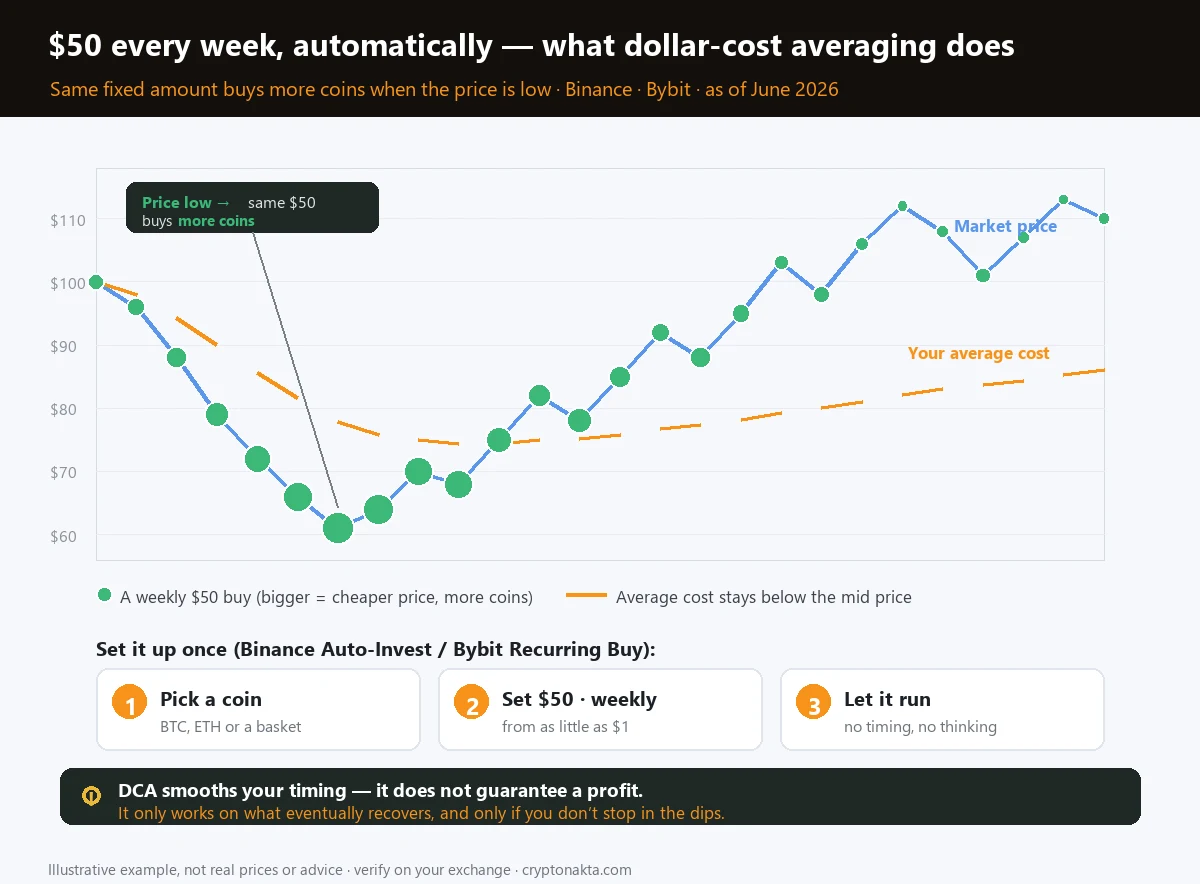
Mechanically, a “$50/week DCA” is the simplest thing in crypto: buy $50 of a coin on a fixed schedule — same amount, same day, every week — and let the exchange fire it automatically. The one clever bit happens on its own. Because the dollar amount is fixed, your $50 buys more coins when the price is low and fewer when it’s high. You never time anything; the arithmetic does it for you, and over a choppy market your average cost drifts below the mid-price.
That’s the whole engine. What it can’t do matters just as much: it won’t turn a dying coin into a winner (averaging into something with no floor just lowers the price at which you keep losing), and it won’t replace deciding what to buy. DCA rewards patience on assets that recover — nothing else.
3. Binance Auto-Invest: the exact taps
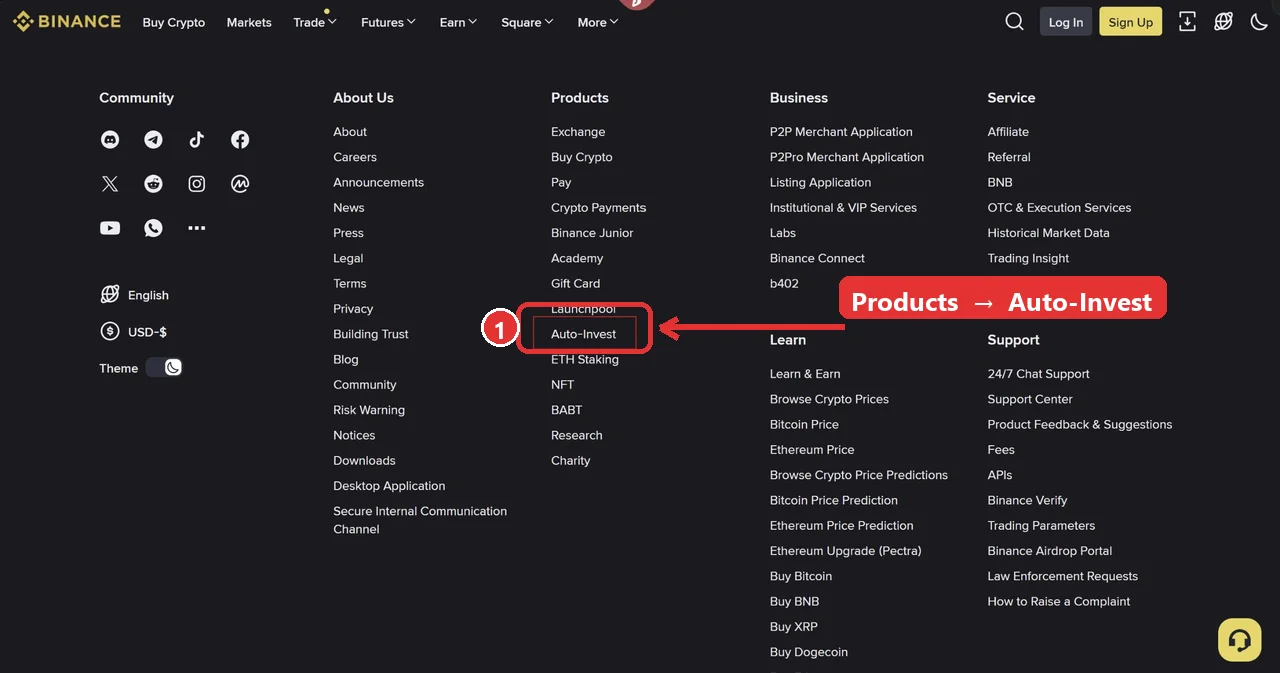
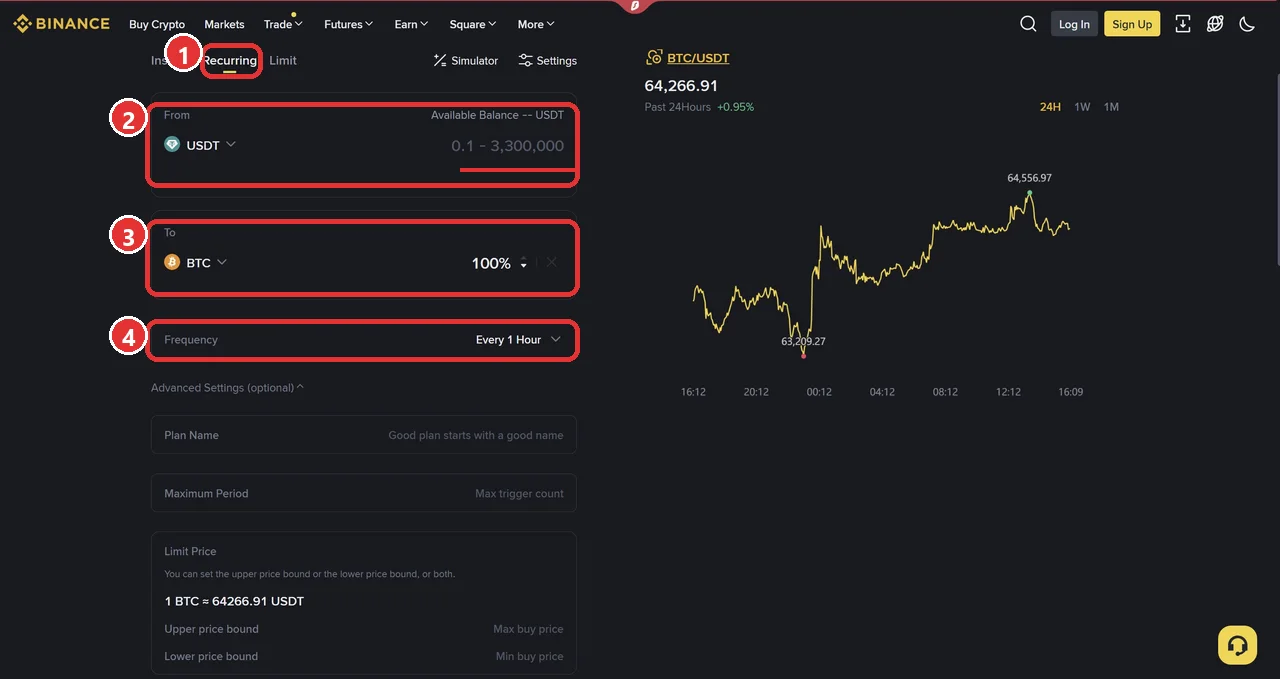
On Binance the feature is Auto-Invest. It schedules a recurring buy of one coin or a basket, paid from your Spot/Funding wallet (or a card where supported), and the floor is tiny — from about $1 — so $50/week is comfortably above it. The taps:
| Step | What you tap |
|---|---|
| 1 | Open Earn → Auto-Invest (or just search “Auto-Invest”). |
| 2 | Pick the coin(s) — BTC, ETH, or a portfolio that splits each buy. |
| 3 | Enter $50 (or 50 USDT/USDC) per cycle and choose the funding source. |
| 4 | Set it to weekly, with a day and time. |
| 5 | Optional: toggle “deposit into Simple Earn” so the coins start earning the moment they’re bought. |
| 6 | Confirm. It runs on its own; pause, edit or cancel anytime. |
4. Bybit Recurring Buy: the exact taps
On Bybit the same idea is called Recurring Buy. The path is a little different — it lives inside the buy-crypto flow rather than the earn section:
| Step | What you tap |
|---|---|
| 1 | Buy Crypto → One-Click Buy. |
| 2 | Select Recurring Buy (near the buy-with-fiat button). |
| 3 | Choose what you pay with (fiat or crypto balance) and the coin. |
| 4 | Enter $50, pick daily/weekly/monthly, set the time. |
| 5 | Keep the Funding Account topped up before each run. |
| 6 | Confirm. Scheduling is free; each buy pays normal trading fees. |
5. Weekly or monthly, and what to buy
Two quick decisions once it’s live.
Weekly or monthly? Honestly, almost a coin-flip. Weekly catches a few more small dips, so the average comes out marginally smoother, and the scheduling fees are negligible either way. What actually matters is your cashflow: if you’re paid monthly, a monthly plan that never bounces beats a weekly one you’re forever refunding. Match the schedule to when money lands.
What to buy? For a $50 budget, keep it to one to three assets you genuinely believe recover:
| Pick | Why |
|---|---|
| BTC | The textbook DCA asset — deepest liquidity, longest record. |
| ETH | Higher risk than BTC, still a serious asset with real usage. |
| A BTC/ETH split | A 70/30 or 50/50 is a sane, common choice. |
| Memecoins | Skip them here — DCA into something with no floor can mean buying all the way to zero. |
6. The free upgrade: make it earn while it stacks
Here’s a free upgrade most people miss: on Binance you can set Auto-Invest to drop each purchase straight into Simple Earn (flexible savings). So the second your weekly $50 of BTC is bought, it starts earning a yield instead of sitting idle — you accumulate and earn interest at the same time, a small but real compounding nudge over years. Flexible Earn usually lets you withdraw anytime, unlike locked products.
7. Six ways people kill their own DCA
Setting a DCA up takes five minutes. Keeping it alive is where it’s won or lost — and none of the failure modes are about picking the wrong day of the week:
| Mistake | Why it kills the plan |
|---|---|
| Stopping in a crash | The big one. Dips are when your fixed $50 buys the most coins; pausing then throws DCA’s whole edge away. Size it so you can ride out a 50%+ drop and keep going. |
| DCA-ing a coin that never recovers | Averaging down only works if the asset comes back. On a dying token you’re just feeding a hole. |
| Over-diversifying | Ten coins on $50 means tiny positions, more fee drag, zero conviction. One to three. |
| Letting funding lapse (Bybit) | Three misses and the plan is cancelled. Keep it topped up. |
| “Set and forget” forever | Automate the buying, not the thinking — review the thesis a few times a year. |
| Leaving it all on the exchange | A growing stack is a growing target. Sweep long-term holdings to your own wallet. |
8. Where to run it, and the bottom line
Auto-invest tooling varies — a low minimum, a decent coin list, clear scheduling and the option to earn on what you buy all make a DCA easier to keep. These are the exchanges we keep dashboard-verified sign-up guides for; a referral code at sign-up applies fee perks:
Binance

Bybit

OKX

Gate.io

KuCoin

Affiliate disclosure: some links are partner links. We may earn a commission at no extra cost to you. This is not investment advice.