Satoshi’s Wallet Address: the First 50 BTC Nobody Can Spend · Why Nothing Has Ever Left · The Genesis Block Message

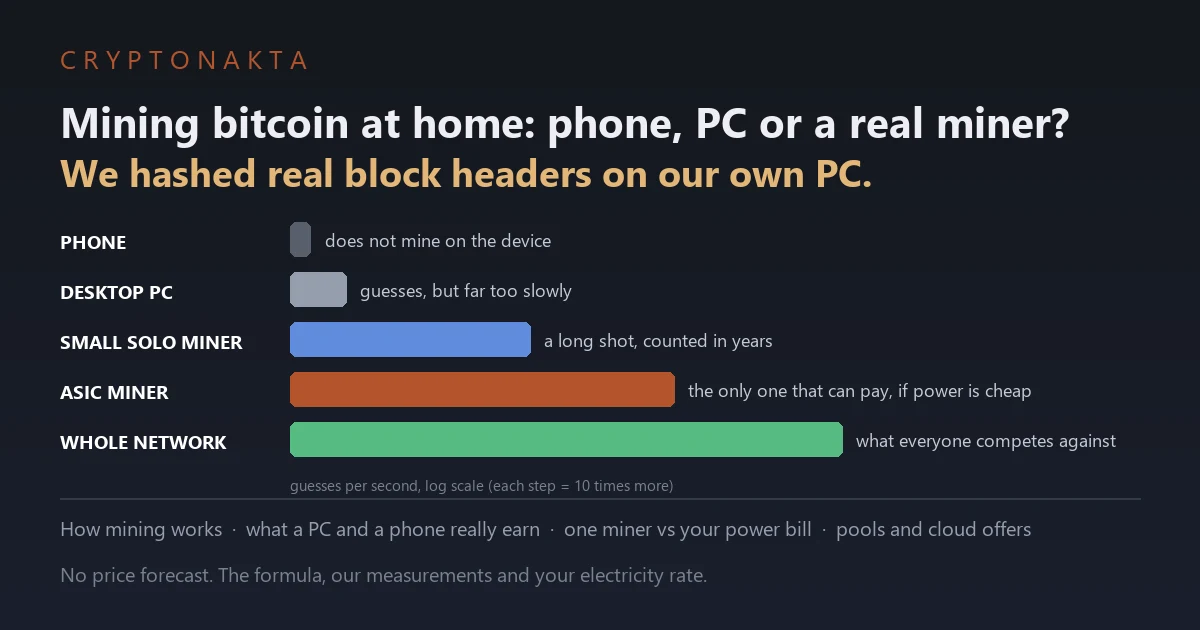
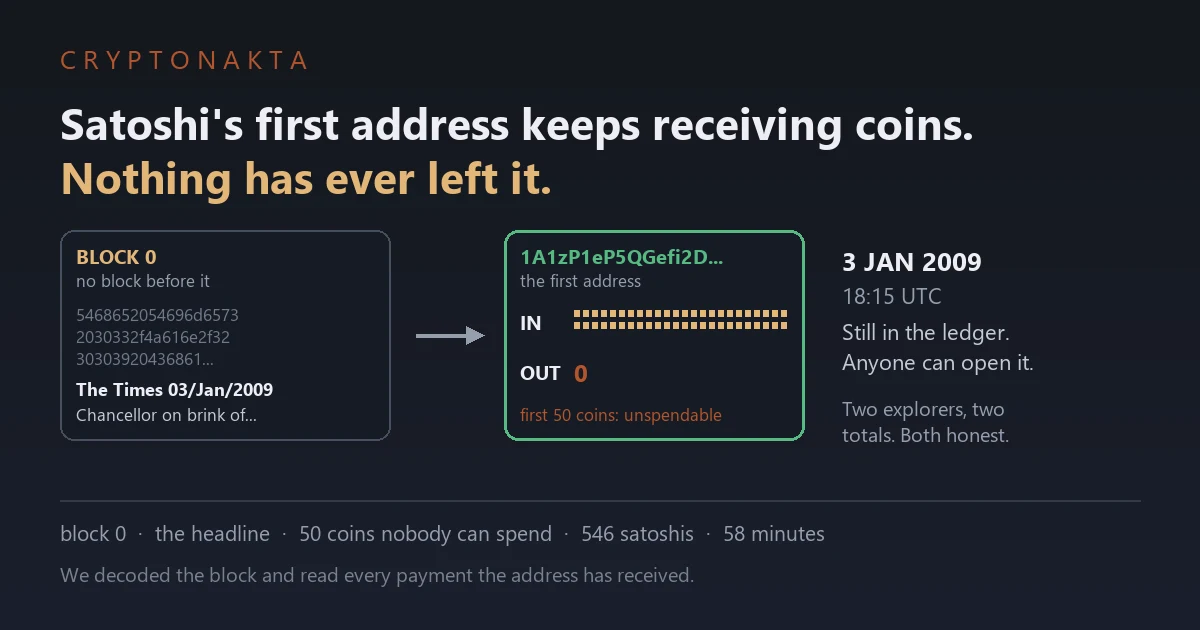
Cover image for an article on the first bitcoin address, the genesis address. Under the line that Satoshi's first address keeps receiving coins and that nothing has ever left it, a diagram shows block zero with a line of hexadecimal that decodes to the Times headline of 3 January 2009, an arrow, and the address 1A1zP1eP5QGefi2DMPTfTL5SLmv7DivfNa with many small incoming payments, zero outgoing payments and a note that the first fifty coins can never be spent - Cryptonakta

Satoshi’s Wallet Address: the First 50 BTC Nobody Can Spend · Why Nothing Has Ever Left · The Genesis Block Message The first bitcoin block paid its reward here in January 2009. I opened the public ledger to see what has arrived since, and what has left. Read from the public ledger at block 968,475, … Read more

Binance Wallet Explained: Custody, No Seed Phrase, Gas Costs and the Address Confusion

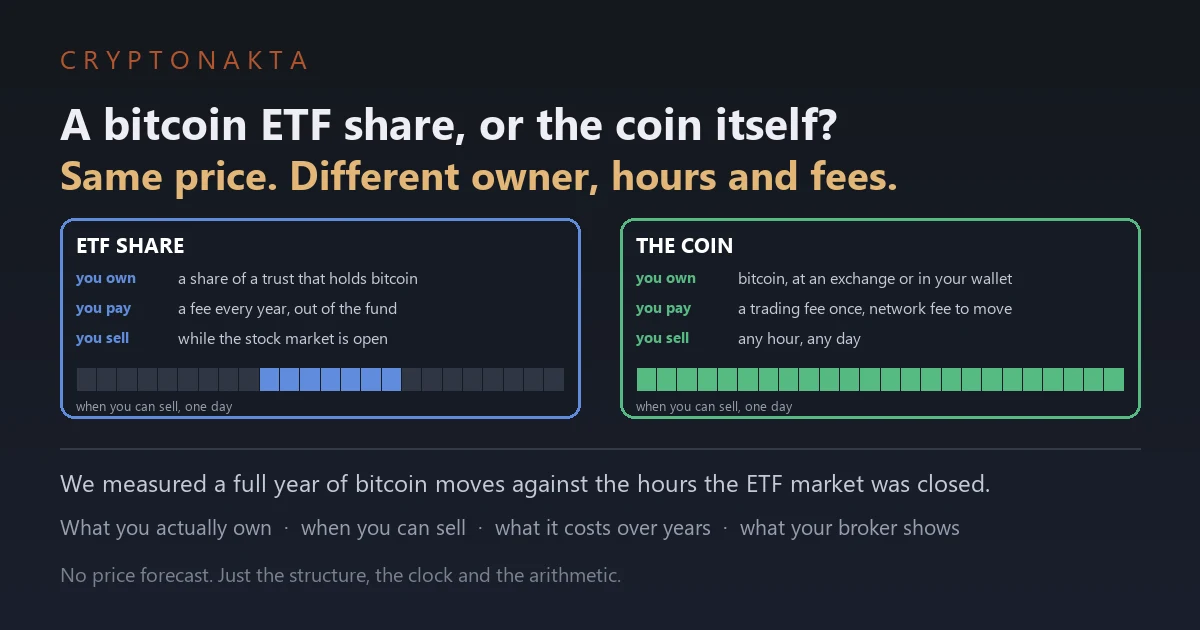
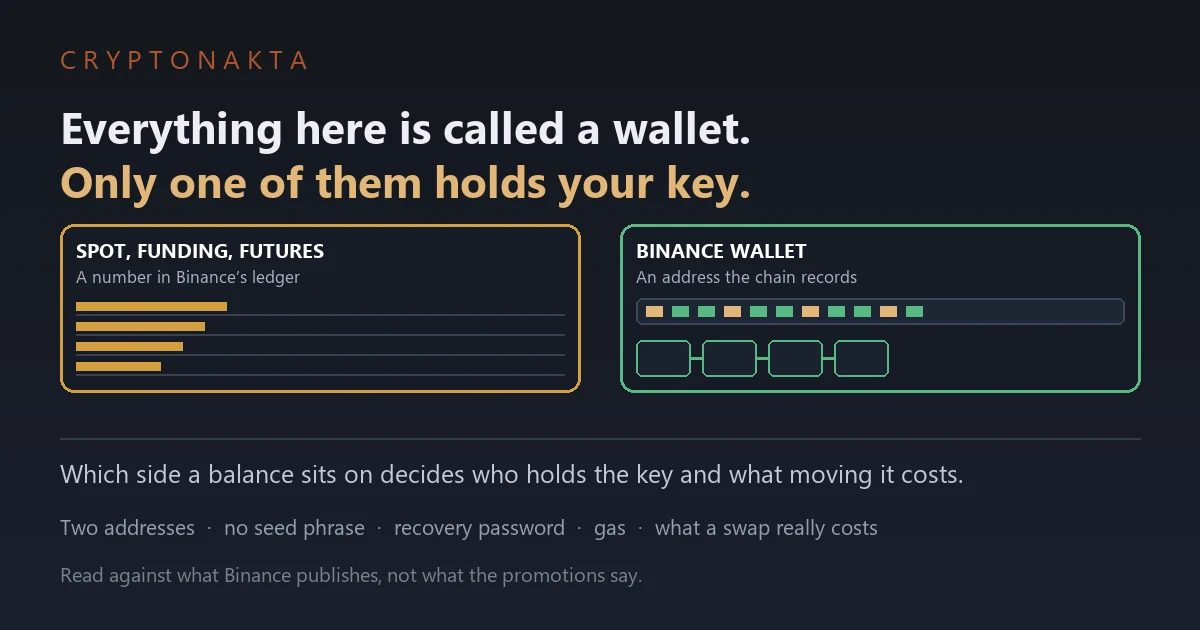
Cover image for a guide to Binance Wallet. Under the line that everything here is called a wallet and only one of them holds your key, two cards sit side by side. The left card is labelled spot, funding and futures and is drawn as a ruled ledger page with entries written on it, described as a number in Binance own ledger. The right card is labelled Binance Wallet and is drawn as an address followed by a row of linked blocks, described as an address the chain records. A closing line states that which side a balance sits on decides who holds the key and what moving it costs, and lists what the guide covers: the two different addresses, the absence of a seed phrase, the recovery password, network gas, and what a swap really costs. A final note says the article is written against what Binance publishes rather than what the promotions say - Cryptonakta

Binance Wallet Explained: Custody, No Seed Phrase, Gas Costs and the Address Confusion Binance’s own documentation says a third party holds your assets until you upgrade. That, and the missing twelve words, are what this guide is about. Checked against Binance support documentation, September 2026 Quick answers Question Short answer What is Binance Wallet? A … Read more

USDT vs USDC: which is safer · redemption terms, chains and book depth

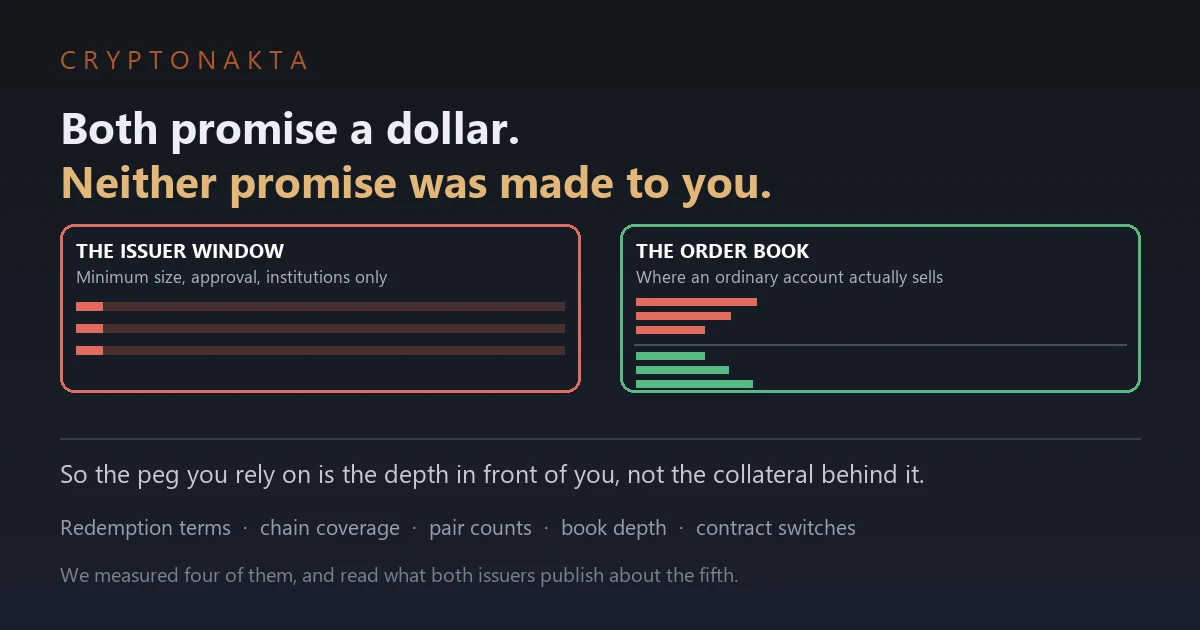
Cover image for an article comparing the two dollar stablecoins. Under the line that both promise a dollar and neither promise was made to the reader, two cards sit side by side. The left card shows the issuer redemption window drawn as barred and closed, labelled with minimum size, approval and institutions only. The right card shows an exchange order book drawn as open, with sell orders above and buy orders below, labelled as where an ordinary account actually sells. A closing line states that the peg a holder relies on is the depth in front of them rather than the collateral behind the token, and lists what the article covers: chain coverage, pair counts, book depth and contract switches, all measured, plus the redemption terms read from the issuers own pages - Cryptonakta

USDT vs USDC: which is safer · redemption terms, chains and book depth The dollar promise is written for institutions, not for you. Your exit is an order book, which makes depth the layer that decides what happens when you sell. Measured from six public order books and eight chain contracts, September 2026 Quick answers … Read more

Editorial standardsIndependent crypto editorial · honest, no hype · not investment advice.
🌐 English