USDT o USDC: cuál es más seguro · diferencias, canje y profundidad

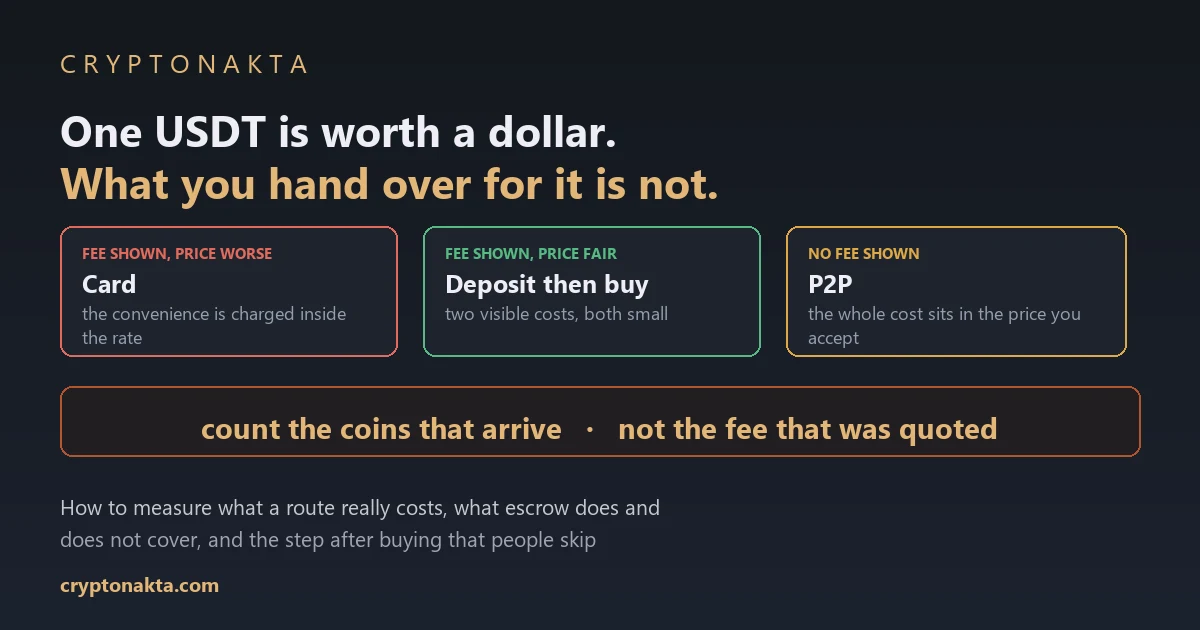
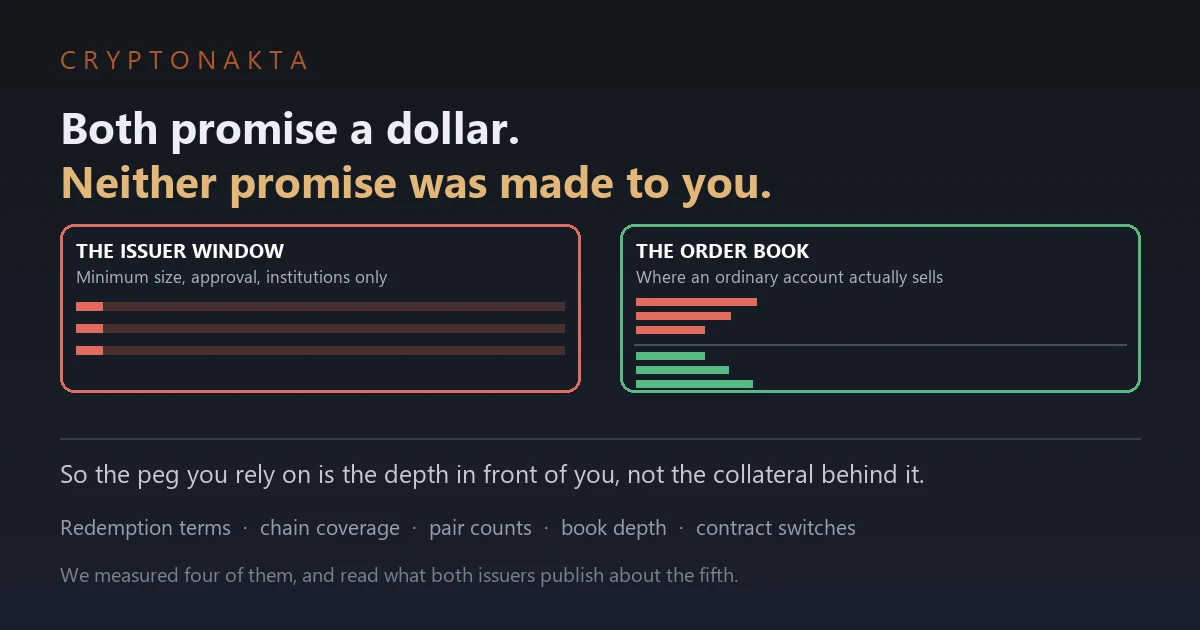
Cover image for an article comparing the two dollar stablecoins. Under the line that both promise a dollar and neither promise was made to the reader, two cards sit side by side. The left card shows the issuer redemption window drawn as barred and closed, labelled with minimum size, approval and institutions only. The right card shows an exchange order book drawn as open, with sell orders above and buy orders below, labelled as where an ordinary account actually sells. A closing line states that the peg a holder relies on is the depth in front of them rather than the collateral behind the token, and lists what the article covers: chain coverage, pair counts, book depth and contract switches, all measured, plus the redemption terms read from the issuers own pages - Cryptonakta

USDT o USDC: cuál es más seguro · diferencias, canje y profundidad La promesa del dólar está escrita para instituciones, no para vos. Tu salida es el libro de órdenes, y en moneda local los dos pares no tienen la misma profundidad. Medido sobre seis libros públicos y ocho contratos de cadena, septiembre de 2026 … Leer más
Clave API de un exchange: qué abre cada permiso, y cuál no debería tocar

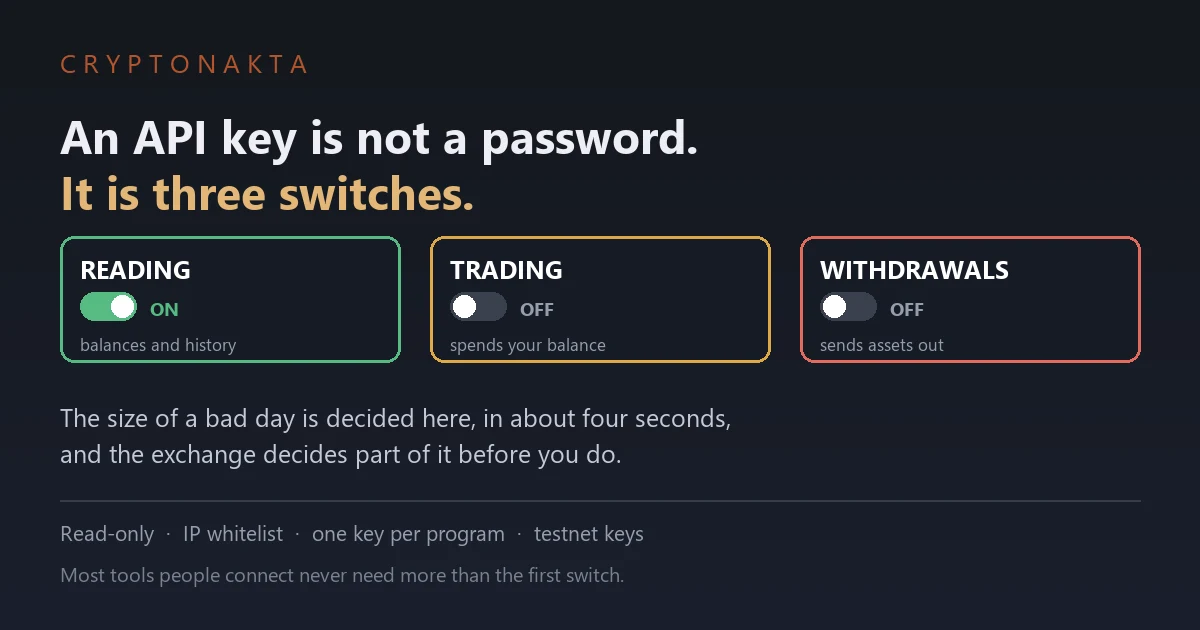
Cover image for a guide to exchange API key permissions. Under the line that an API key is not a password but three switches, three toggle cards show reading switched on for balances and history, trading switched off because it spends your balance, and withdrawals switched off because it sends assets out of the account, with a closing line explaining that the size of a bad day is decided at this screen in about four seconds and that the exchange decides part of it before you do - Cryptonakta

Clave API de un exchange: qué abre cada permiso, y cuál no debería tocar Una clave API no es una contraseña sino un conjunto de interruptores, y el exchange comprueba si fijó una dirección antes de dejarle encender los peligrosos. Hecho con documentación de exchanges leída directamente, consultada en septiembre de 2026 Resumen rápido Pregunta … Leer más

Mover cripto entre exchanges: lo que tarda y lo que cuesta de verdad

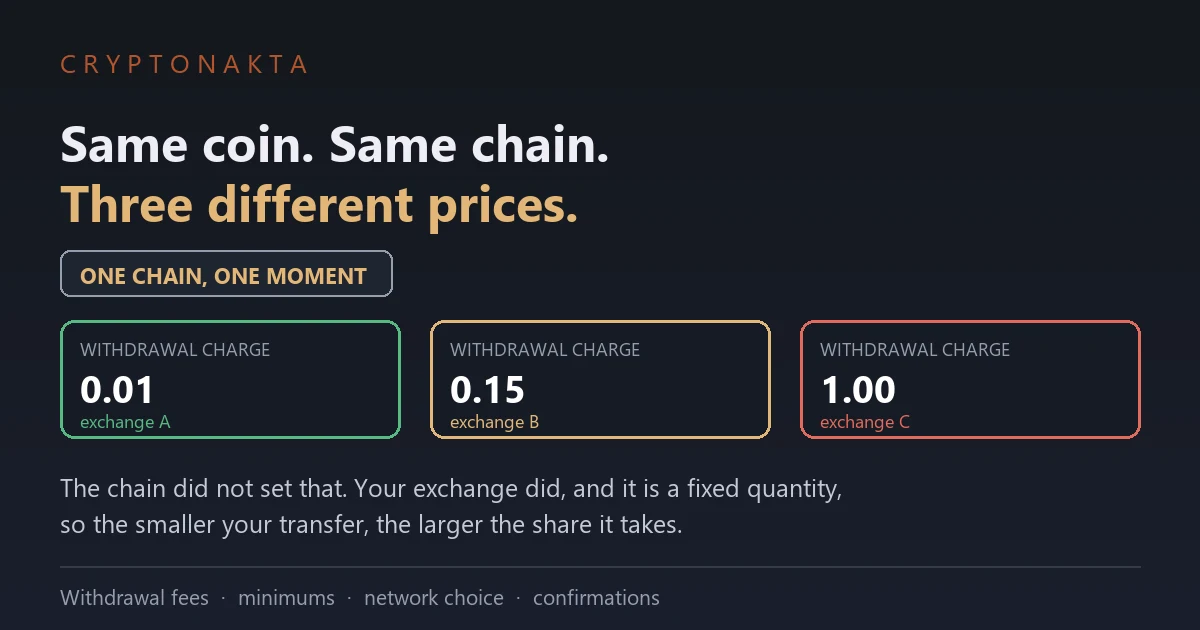
Cover image for a guide to what it costs to move crypto between exchanges. Under the line that the coin and the chain are the same while three prices are not, a label marks one chain at one moment and three chips show withdrawal charges of one hundredth, fifteen hundredths and a full unit at three different exchanges, with a closing line explaining that the chain did not set those numbers, that the exchange did, and that because the charge is a fixed quantity the smaller the transfer the larger the share it takes - Cryptonakta

Mover cripto entre exchanges: lo que tarda y lo que cuesta de verdad La comisión de retiro no la pone la red, la pone su exchange, y es una cantidad fija: cuanto menos envía, mayor es el porcentaje. Tomado de endpoints públicos de exchanges y de sus páginas de ayuda, septiembre de 2026 Resumen rápido … Leer más

Restablecer el 2FA: autenticador perdido, revisión de identidad, bloqueo de retiros, reloj y robo de cuenta

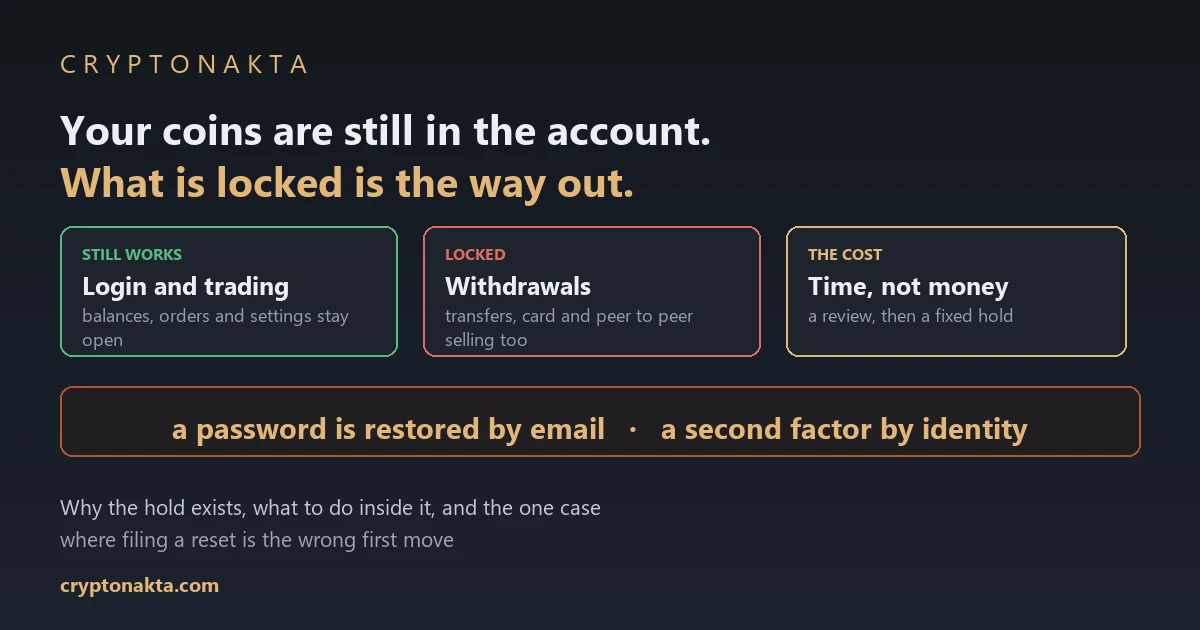
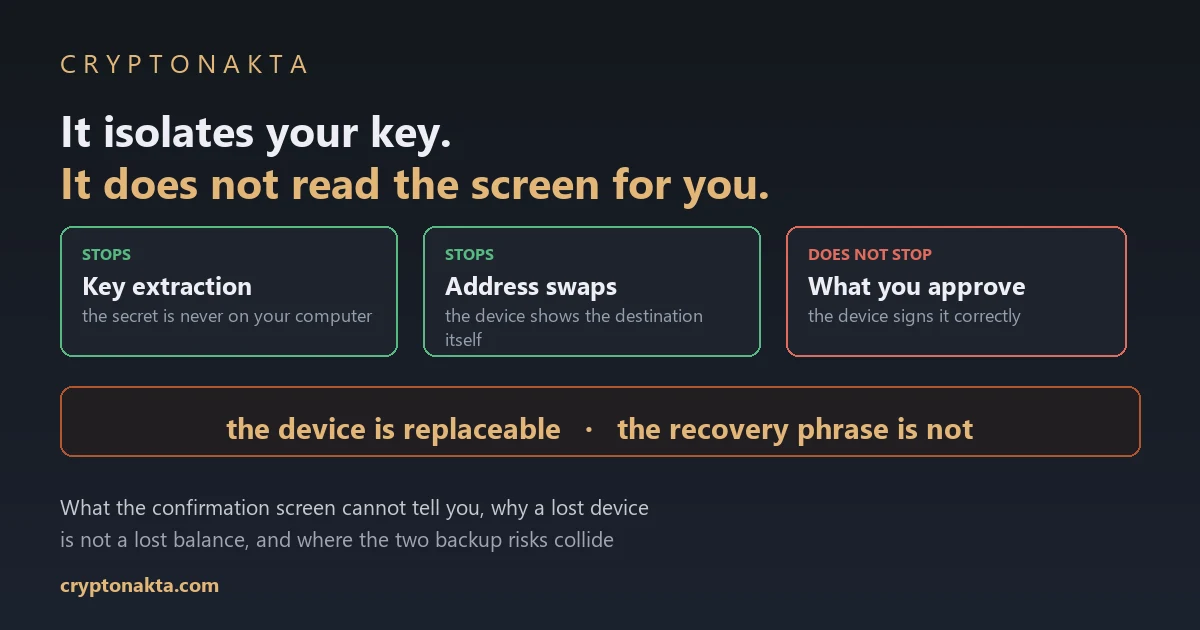
Cover image for a guide to losing two-factor authentication on a crypto exchange. The headline states that your coins are still in the account and that what is locked is the way out. Three cards below sort the situation: one marked as still working reads login and trading, with balances, orders and settings staying open; one marked as locked reads withdrawals, including transfers, card spending and peer to peer selling; and one marked as the cost reads time rather than money, being a review followed by a fixed hold. A wide panel underneath states that a password is restored by email while a second factor is restored by identity. Lines at the foot say the article covers why the hold exists, what to do inside it, and the one case where filing a reset is the wrong first move - Cryptonakta

Restablecer el 2FA: autenticador perdido, revisión de identidad, bloqueo de retiros, reloj y robo de cuenta Pierdes el autenticador y las monedas siguen en la cuenta. La contraseña la devuelve el correo y el segundo factor lo devuelve la identidad, y el bloqueo de retiros que viene después no es un castigo, es el control … Leer más

¿Por qué mover diez euros cuesta lo mismo que mover diez mil?

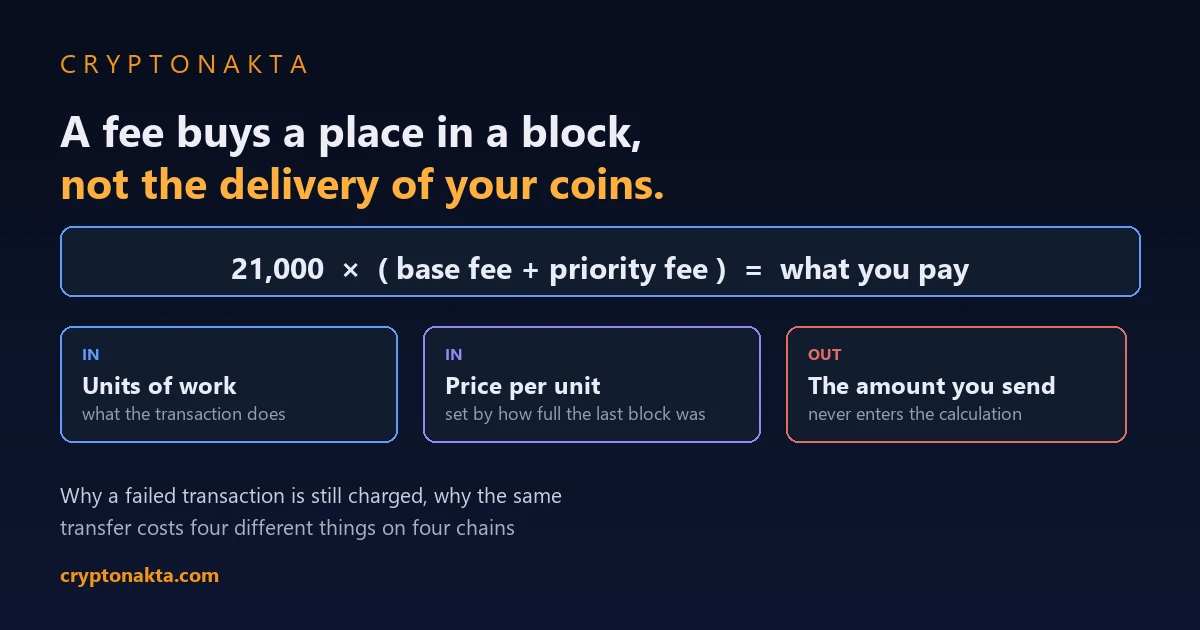
Cover image for a guide to crypto network fees and gas. The headline states that a fee buys a place inside a block rather than the delivery of the coins. A wide blue panel shows the calculation as 21,000 multiplied by the sum of the base fee and the priority fee, giving what the sender pays. Three cards below separate the inputs from the value people wrongly expect: the first two are marked as inputs and read units of work, meaning what the transaction does, and price per unit, set by how full the last block was, while the third is marked as excluded and reads that the amount you send never enters the calculation. Lines at the foot say the article explains why a failed transaction is still charged and why the same transfer costs four different things on four chains - Cryptonakta

¿Por qué mover diez euros cuesta lo mismo que mover diez mil? Una comisión de red compra un sitio dentro de un bloque. Esta es la aritmética que fija el precio, y por qué una transacción fallida también se cobra. Escrito a partir de documentación de protocolos y exchanges, revisada el 3 de septiembre de … Leer más

Estándares editorialesEditorial cripto independiente · honesto, sin hype · no es asesoramiento de inversión.
🌐 Español