Como comprar USDT no Brasil: PIX; livro de ofertas; P2P e escolha de rede

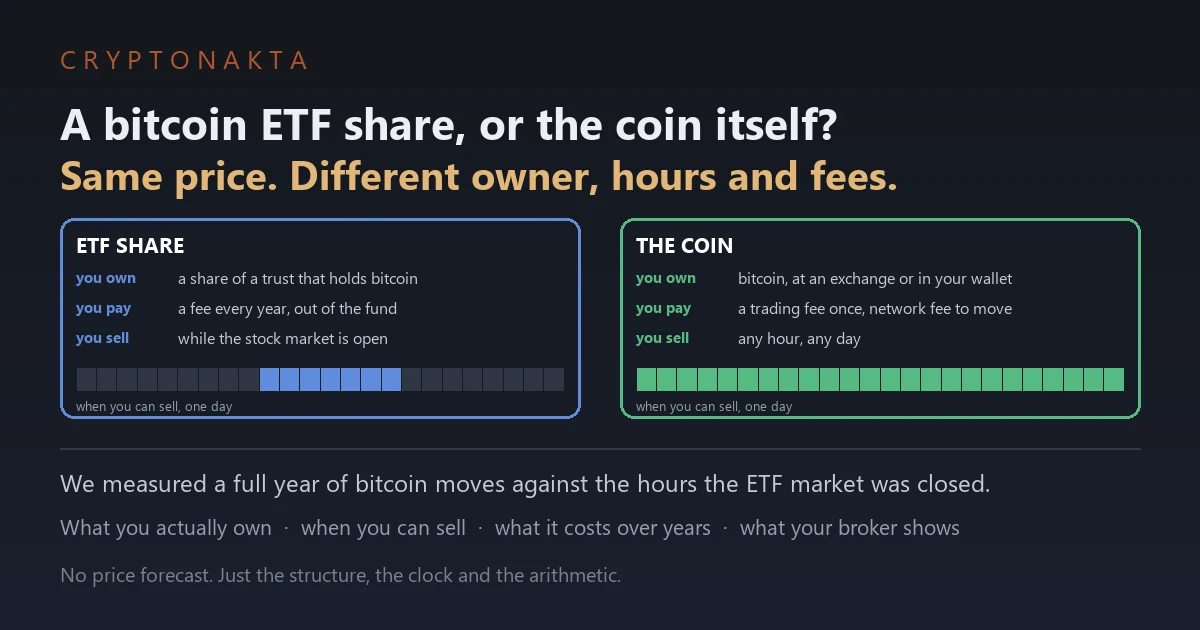
Cover image for a guide to buying USDT. The headline states that one USDT is worth a dollar but what you hand over for it is not. Three cards below compare the routes: a card purchase, marked fee shown and price worse, where the convenience is charged inside the rate; depositing money and then buying on the spot market, marked fee shown and price fair, with two visible costs that are both small; and a peer to peer trade, marked no fee shown, where the whole cost sits in the price you accept. A wide panel underneath says to count the coins that arrive rather than the fee that was quoted. Lines at the foot say the article covers how to measure what a route really costs, what escrow does and does not cover, and the step after buying that people skip - Cryptonakta

Como comprar USDT no Brasil: PIX; livro de ofertas; P2P e escolha de rede Onde o depósito é instantâneo e sem custo, a conta muda. A rota que os guias estrangeiros tratam como burocrática costuma ser a mais barata daqui, e este texto mostra como verificar isso pela quantidade que chega. Baseado na documentação pública … Ler mais

Como ler o livro de ofertas: profundidade, spread e slippage

Cover image for a guide to order books, market depth and slippage on crypto exchanges. On the right two miniature order books stand side by side under the heading that the same order meets two different books: in the first, thick bars of resting quantity mean only one line is touched and the average price barely moves, while in the second, thin bars mean five lines are eaten and the average lands far away. On the left two cards separate the three costs of a trade, noting that the fee is printed on the order ticket before the trade is confirmed while the spread and the slippage are not, one being read off the book and the other discovered afterwards. The headline reads that the screen shows the last completed trade and that what is left resting decides the price a buyer actually gets, with lines below explaining that the article shows why the same amount of money can cost a hundred times more on one coin than on another, measured on live order books - Cryptonakta

Como ler o livro de ofertas: profundidade, spread e slippage O percurso de uma ordem a mercado, os três custos que entram junto e o que medimos em livros públicos Medições de 2 de setembro de 2026 Resumo rápido Pergunta Resposta curta O preço grande em destaque na tela É o preço do último negócio … Ler mais

O número que você digita não é o número que vende

Cover image for a guide to stop loss orders on crypto exchanges. On the right a price line falls through a dashed horizontal line labelled as the trigger price that the trader sets, and a marked point well below it is labelled as the place the order was actually filled, with a note that the order book decided that second price. A further dashed line underneath carries the caption that in the other case nothing filled at all and the order is still sitting there. On the left two cards describe the two ways the same order fails, firing and filling far below the number that was set, or firing and never filling while the position stays open. The headline reads that the number typed into a stop order is a condition and not the price at which anything is sold, with lines below introducing the trigger price, the order price and the fill price and who decides each, and noting that a liquidation can arrive before the stop does - Cryptonakta

O número que você digita não é o número que vende São três preços diferentes dentro de uma ordem só: o que você digita, o que a corretora observa para disparar e o que sai do livro de ofertas. Atualizado em agosto de 2026 Resumo rápido Dúvida comum Resposta curta O preço que eu digitei … Ler mais

Padrões editoriaisEditorial cripto independente · honesto, sem hype · não é recomendação de investimento.
🌐 Português