Binance Wallet Explained: Custody, No Seed Phrase, Gas Costs and the Address Confusion

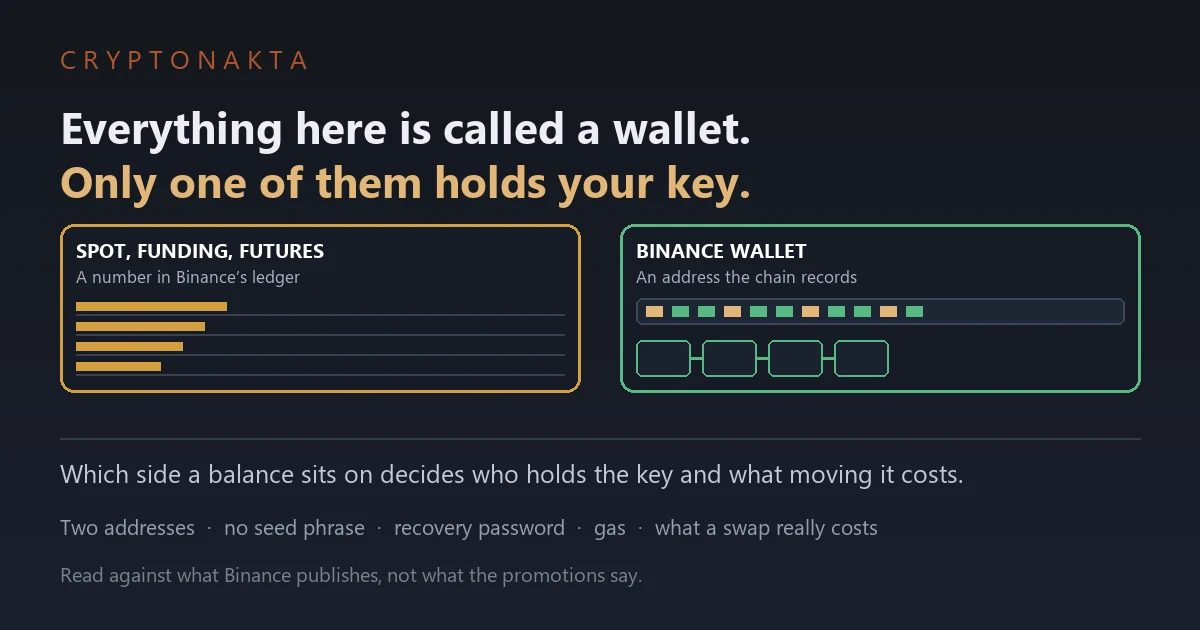
Cover image for a guide to Binance Wallet. Under the line that everything here is called a wallet and only one of them holds your key, two cards sit side by side. The left card is labelled spot, funding and futures and is drawn as a ruled ledger page with entries written on it, described as a number in Binance own ledger. The right card is labelled Binance Wallet and is drawn as an address followed by a row of linked blocks, described as an address the chain records. A closing line states that which side a balance sits on decides who holds the key and what moving it costs, and lists what the guide covers: the two different addresses, the absence of a seed phrase, the recovery password, network gas, and what a swap really costs. A final note says the article is written against what Binance publishes rather than what the promotions say - Cryptonakta

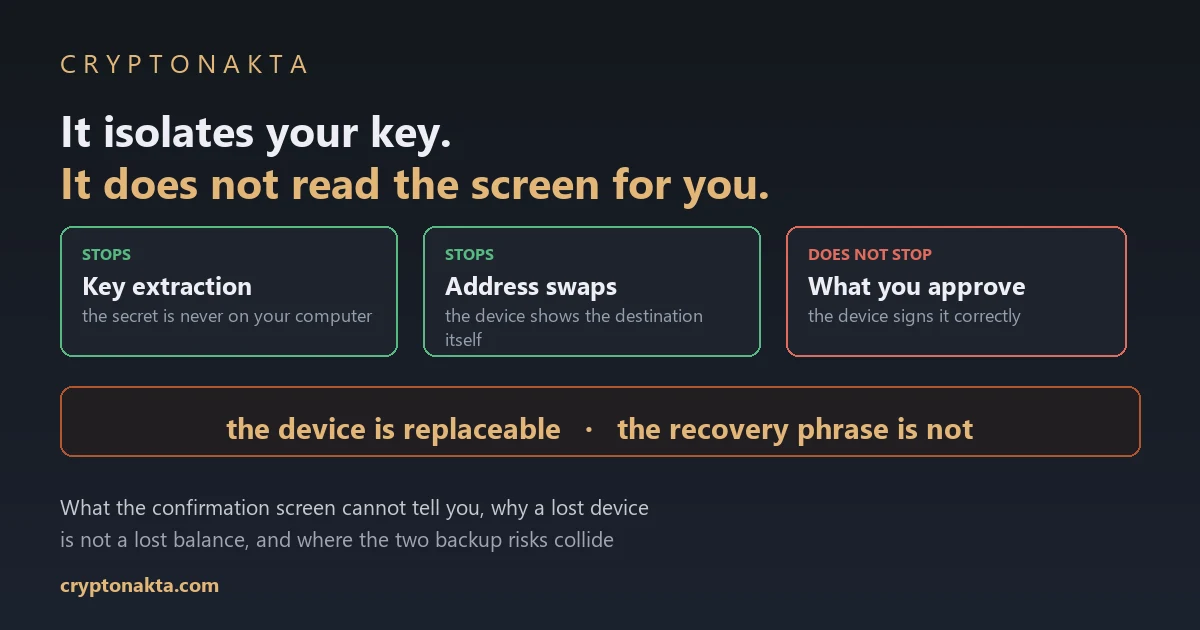
Binance Wallet Explained: Custody, No Seed Phrase, Gas Costs and the Address Confusion Binance’s own documentation says a third party holds your assets until you upgrade. That, and the missing twelve words, are what this guide is about. Checked against Binance support documentation, September 2026 Quick answers Question Short answer What is Binance Wallet? A … Read more

USDT vs USDC: which is safer · redemption terms, chains and book depth

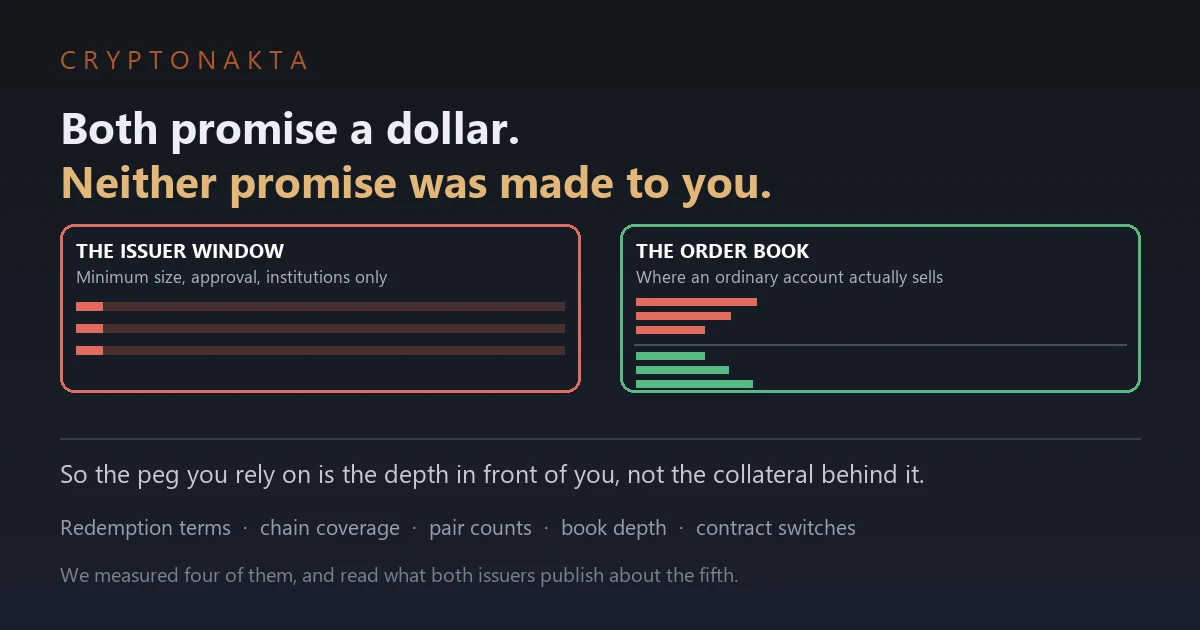
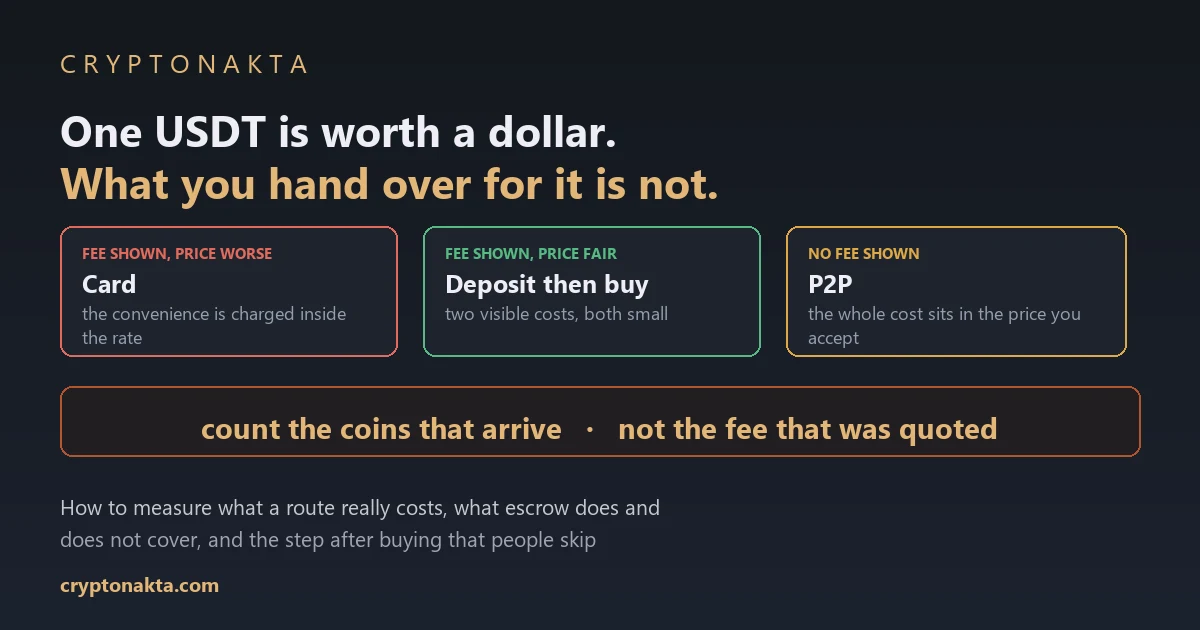
Cover image for an article comparing the two dollar stablecoins. Under the line that both promise a dollar and neither promise was made to the reader, two cards sit side by side. The left card shows the issuer redemption window drawn as barred and closed, labelled with minimum size, approval and institutions only. The right card shows an exchange order book drawn as open, with sell orders above and buy orders below, labelled as where an ordinary account actually sells. A closing line states that the peg a holder relies on is the depth in front of them rather than the collateral behind the token, and lists what the article covers: chain coverage, pair counts, book depth and contract switches, all measured, plus the redemption terms read from the issuers own pages - Cryptonakta

USDT vs USDC: which is safer · redemption terms, chains and book depth The dollar promise is written for institutions, not for you. Your exit is an order book, which makes depth the layer that decides what happens when you sell. Measured from six public order books and eight chain contracts, September 2026 Quick answers … Read more

Giving a Bot Your API Key: What Each Permission Switch Actually Opens

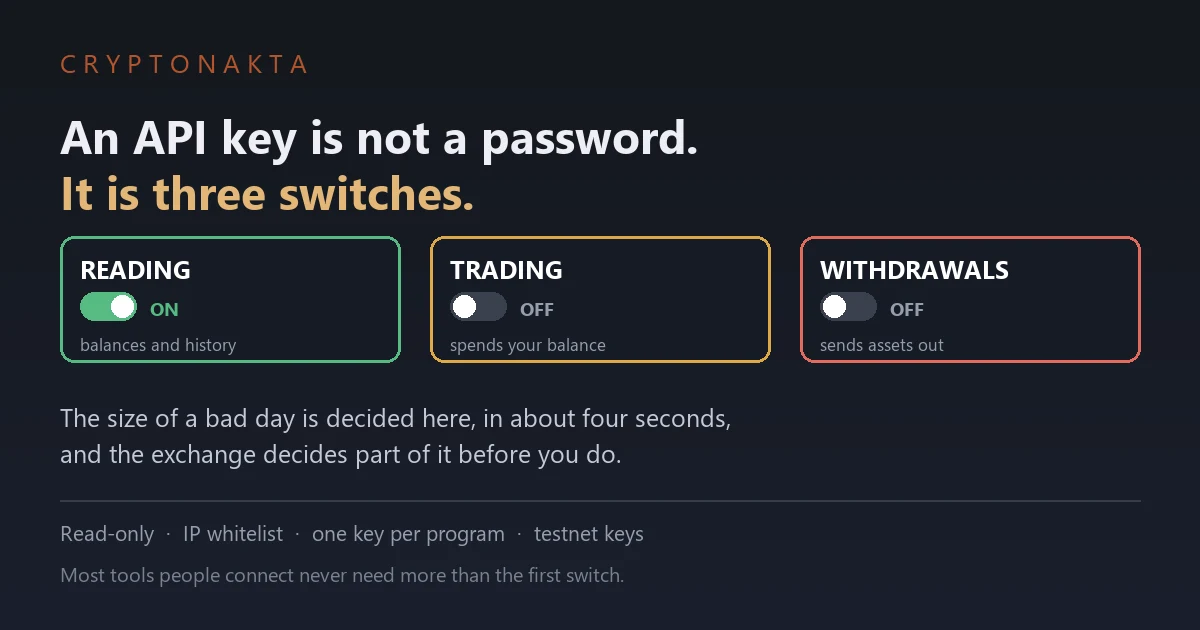
Cover image for a guide to exchange API key permissions. Under the line that an API key is not a password but three switches, three toggle cards show reading switched on for balances and history, trading switched off because it spends your balance, and withdrawals switched off because it sends assets out of the account, with a closing line explaining that the size of a bad day is decided at this screen in about four seconds and that the exchange decides part of it before you do - Cryptonakta

Giving a Bot Your API Key: What Each Permission Switch Actually Opens An API key is a bundle of switches rather than a password. The dangerous ones are gated on whether you pinned an address, and the exchange checks that first. Built from exchange documentation read directly, checked September 2026 The short version Question Short … Read more

2FA Reset on a Crypto Exchange: Lost Authenticator, Identity Review, Withdrawal Hold, TOTP Clock, Account Takeover

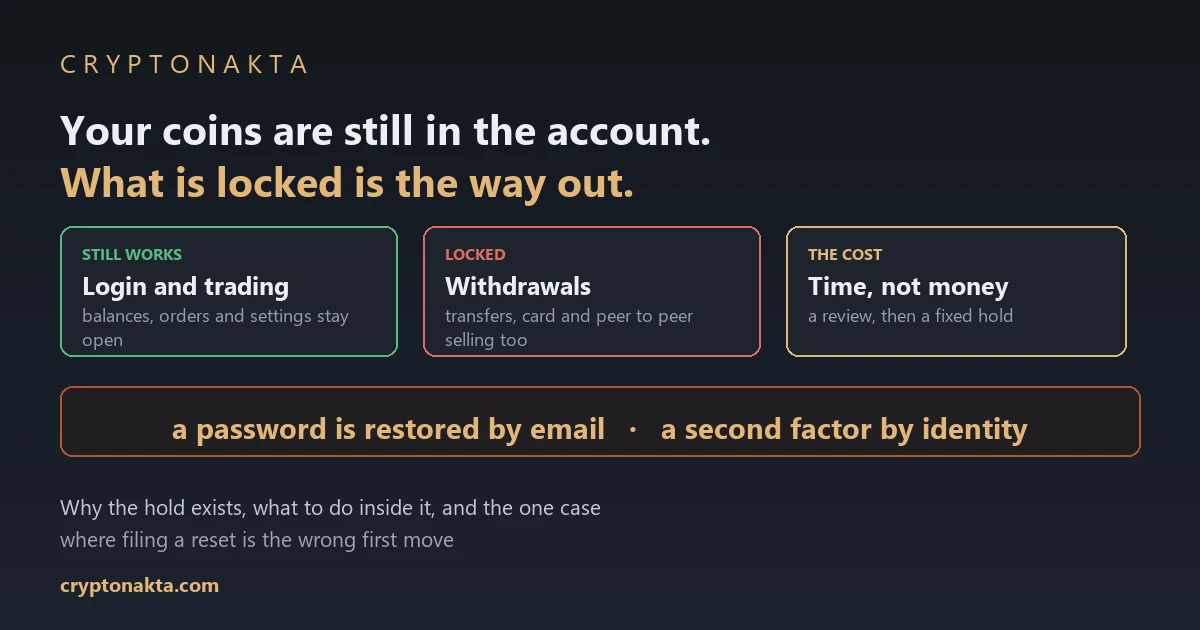
Cover image for a guide to losing two-factor authentication on a crypto exchange. The headline states that your coins are still in the account and that what is locked is the way out. Three cards below sort the situation: one marked as still working reads login and trading, with balances, orders and settings staying open; one marked as locked reads withdrawals, including transfers, card spending and peer to peer selling; and one marked as the cost reads time rather than money, being a review followed by a fixed hold. A wide panel underneath states that a password is restored by email while a second factor is restored by identity. Lines at the foot say the article covers why the hold exists, what to do inside it, and the one case where filing a reset is the wrong first move - Cryptonakta

2FA Reset on a Crypto Exchange: Lost Authenticator, Identity Review, Withdrawal Hold, TOTP Clock, Account Takeover Lose the authenticator and the coins stay in the account. A password is restored by email and a second factor by identity, and the withdrawal hold that follows is not a punishment, it is the control that stops whoever … Read more

Two Numbers Decide Your Gas Fee, and Neither One Is the Amount You Send

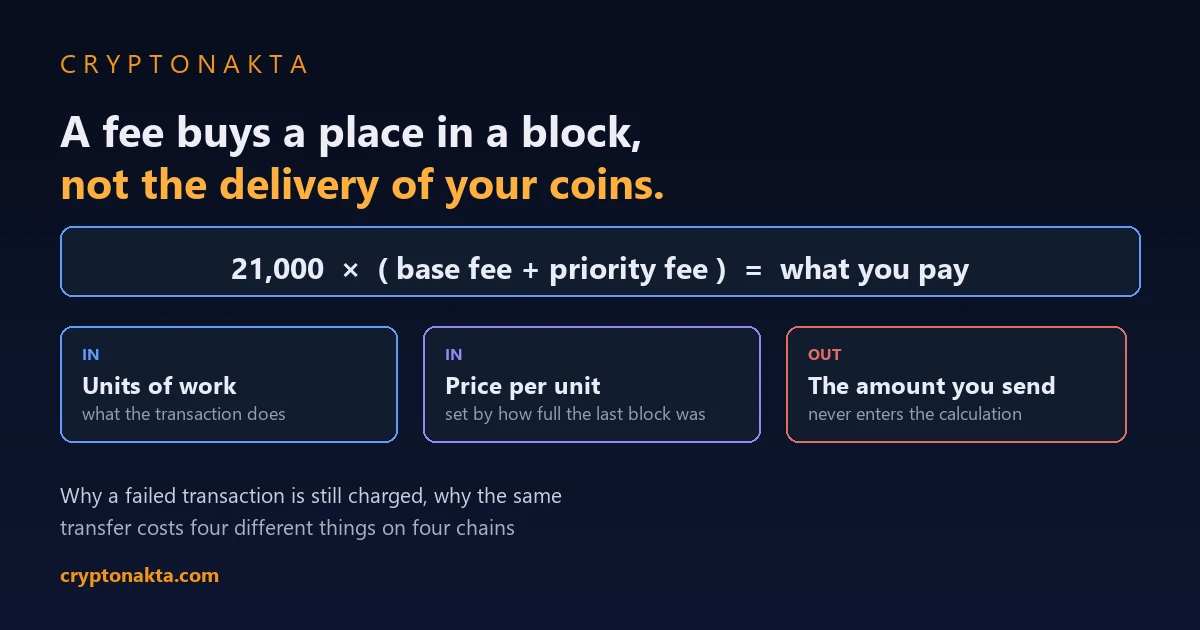
Cover image for a guide to crypto network fees and gas. The headline states that a fee buys a place inside a block rather than the delivery of the coins. A wide blue panel shows the calculation as 21,000 multiplied by the sum of the base fee and the priority fee, giving what the sender pays. Three cards below separate the inputs from the value people wrongly expect: the first two are marked as inputs and read units of work, meaning what the transaction does, and price per unit, set by how full the last block was, while the third is marked as excluded and reads that the amount you send never enters the calculation. Lines at the foot say the article explains why a failed transaction is still charged and why the same transfer costs four different things on four chains - Cryptonakta

Two Numbers Decide Your Gas Fee, and Neither One Is the Amount You Send A network fee buys space inside a block. Here is the arithmetic that sets the price, and why a failed transaction is still charged for it. Written from primary protocol and exchange documentation, checked 3 September 2026 The short version Question … Read more

Editorial standardsIndependent crypto editorial · honest, no hype · not investment advice.
🌐 English