How to Create a Meme Coin: Pump.fun Step by Step, Free or Not, Cost in SOL, Bonding Curve Graduation, Making Money
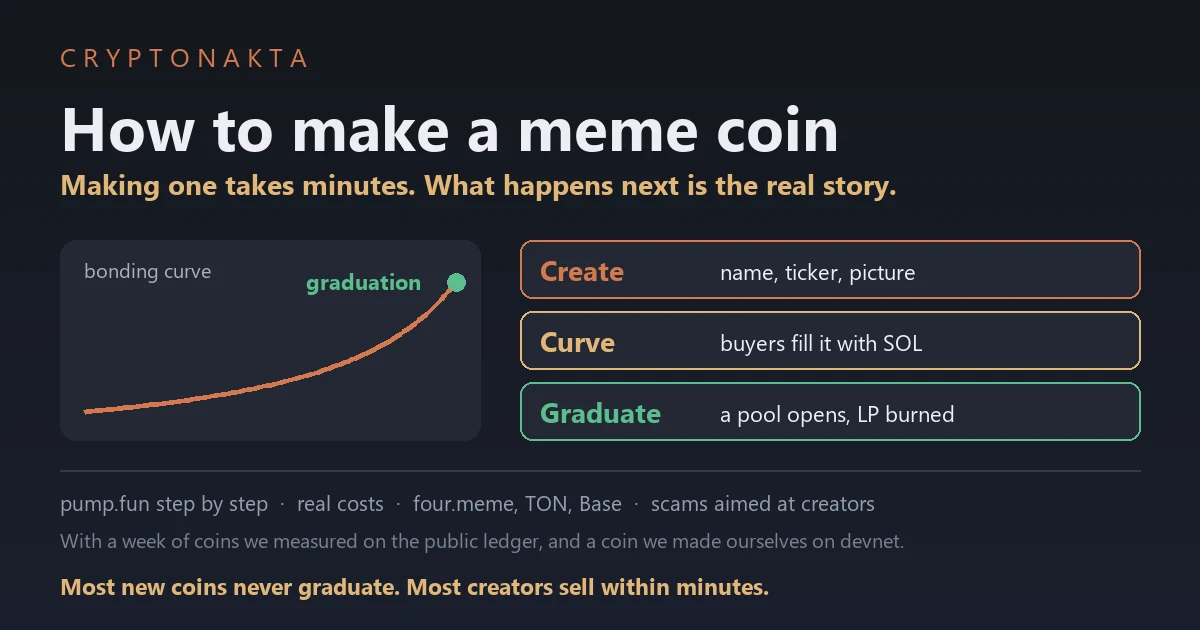
Anyone can create a meme coin in a few minutes, and what happens after it exists is the part worth knowing. The form asks for a name, a ticker and a picture. One wallet signature later, the coin is live and anyone can trade it.
Guides on making one rarely show what comes next. So I counted every coin created on pump.fun for a full week on Solana’s public ledger. I followed graduated coins day by day, watched creator wallets live and created test tokens on devnet.
In this article (16)
Can you create a meme coin for free? What it really costs in SOLCan you make a meme coin on Fomo, Phantom, Axiom or Robinhood Chain?Two ways to make a meme coin: launchpad or direct mintHow to launch a meme coin on BNB Chain, Base or TONHow to buy SOL, BNB or GRAM and move it to your own walletHow to create a meme coin on pump.fun, step by stepWe created the same token three ways on Solana devnetHow does the pump.fun bonding curve work, and what is graduation?What is the pump.fun graduation rate? Our one-week countWhat happens to a meme coin after graduation?How pump.fun fees have changedHow to check if a meme coin is a rug pull before you buyScams that target people who create meme coinsCan you make money creating a meme coin?Using someone else’s name or meme, and whether it is illegalMy take on creating a meme coin
Can you create a meme coin for free? What it really costs in SOL
Creating a meme coin on pump.fun is free, yet starting one is not quite free. Pump.fun charges no creation fee. Your Solana wallet still pays a small network fee and refundable account deposits.
A meme coin is a coin people trade on a name, a picture and a story, with no product behind it. Technically it is a token, since it lives on an existing chain such as Solana instead of running its own.
So how much SOL does it take? On October 29, 2026 I created a test coin with pump.fun’s own create instruction on Solana devnet, the test network where SOL is free. My wallet paid 0.0054 SOL in total, and none of it went to pump.fun. It covered the signature fee and the deposits for the new coin’s accounts.
Solana calls that deposit rent. The rate has been coming down in steps, so trust the amount on your wallet’s signing screen. The first buy means buying some of your own coin as you create it, and it is optional. Pump.fun suggests no amount.
And what happens after you press the button? We counted every coin made on pump.fun from October 21 to 27, 2026 on the public Solana ledger. Only 2.09% of them sold out their curve and moved to a trading pool.
Can you make a meme coin on Fomo, Phantom, Axiom or Robinhood Chain?
You cannot create a meme coin inside Fomo, Axiom or Phantom, and Robinhood Chain is a blockchain rather than an app. Fomo and Axiom are trading apps, and Phantom is a wallet. Meme coins are made on a launchpad such as pump.fun, or by minting the token yourself.
A launchpad is a site that creates the token and opens trading in one step. Fomo calls itself a social crypto trading app, and its own answer page sends would-be creators to launchpads. Axiom describes itself as a hybrid web trading terminal. Its docs say nothing about creating tokens.
Phantom is where you hold SOL and sign. When you create a coin on pump.fun, Phantom asks you to approve. That is the only Phantom step. I found no token creation feature in Phantom or in GMGN, a trading and tracking tool.
Robinhood Chain is an Ethereum layer 2 that Robinhood built on Arbitrum, aimed at real-world assets. Robinhood’s own pages do not mention meme coins. Launchpads on top of it come and go, so check what is live. New to wallets? Our crypto wallet guide covers the basics.
Two ways to make a meme coin: launchpad or direct mint
There are two ways to make a meme coin. A launchpad such as pump.fun creates the coin and sells it along a price curve, the bonding curve, until it moves to a trading pool, a step called graduation. Minting the token yourself gives you a coin with no price and no market until you build a pool and put money in it.
The launchpad route takes a minute and very little SOL. The direct route takes several steps plus your own money for the pool, and in return you control more of the settings.
| Launchpad (pump.fun, four.meme, LaunchLab) | Direct mint (SPL, Token-2022, ERC-20, jetton) | |
|---|---|---|
| Price at the start | Set by the bonding curve | None until you create a pool |
| Money you put in | Network fee, deposits, optional first buy | Setup costs plus the coins and SOL for the pool |
| Pool creation | Done for you at graduation | Raydium CPMM or AMM v4: 0.15 SOL. CLMM: no creation fee |
| Supply | Fixed at one billion | You choose |
| Mint and freeze rights | Removed by the launchpad | You give them up yourself |
| LP tokens | Burned at graduation on pump.fun | Burn, lock or keep them |
A liquidity pool holds a stock of the coin and a stock of SOL side by side, and anyone can swap between them. Whoever adds money gets LP tokens as a receipt. An LP burn destroys those receipts, so nobody can take the pool money back out. Raydium’s Burn & Earn locks the position forever instead, as its docs explain.
On BNB Chain or Base, the direct route means an ERC-20 contract built with OpenZeppelin and verified on BscScan. Deployment gas was under a dollar when we checked. On TON the official Minter does the same job.
How to launch a meme coin on BNB Chain, Base or TON
You can launch a meme coin on BNB Chain with four.meme, on Base with Zora or Clanker, and on TON with the official Minter. Four.meme is the closest match to pump.fun, with a bonding curve that moves to PancakeSwap.
In the same week we counted pump.fun coins on Solana, four.meme’s official contract logged 18,313 new coins and 11 graduations, a rate of 0.06%. With so few graduations that rate swings a lot.
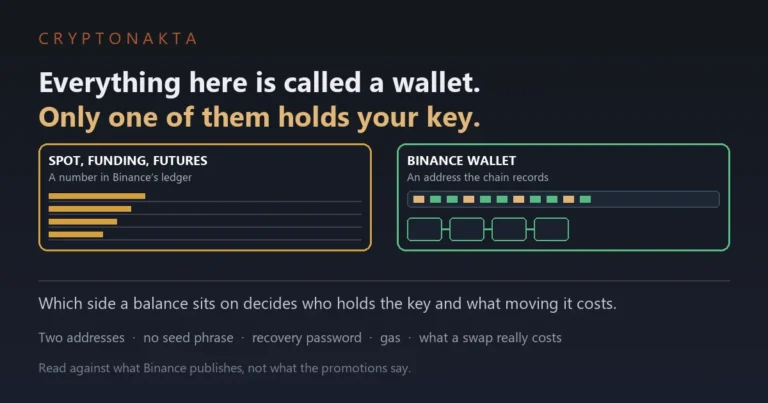
Binance Wallet’s docs show no create button of its own. Its Meme Rush section is built with four.meme. You create the token on four.meme under Profile, then Create Token, and sign with Binance Wallet. Our Binance Wallet guide covers the wallet, and our BNB explainer covers the coin.
The main options, from their official docs on October 29, 2026:
| Launchpad or tool | Chain | Creation cost (official docs) | Graduation or pool | Creator share |
|---|---|---|---|---|
| pump.fun | Solana | No platform fee | About 85 SOL (our math), then PumpSwap | 0.30% on the curve |
| Raydium LaunchLab | Solana | About 0.05 to 0.5 SOL by mode | 85 SOL, or 24 SOL minimum, then Raydium CPMM | Not stated |
| Jupiter Studio | Solana | Not stated | 15,000 USDC worth, then Meteora | Half of the 1% fee |
| four.meme | BNB Chain | About 0.005 BNB | Roughly $10,000 raised, then PancakeSwap | Not stated |
| Zora, Clanker, Flaunch | Base | Not stated | No curve, Uniswap V4 pool | Set by each platform |
| TON Minter | TON | Wallet funded with 0.5 Gram | No curve, you build the pool | None |
Binance

Bybit
OKX
Affiliate disclosure: some links are partner links. We may earn a commission at no extra cost to you. This is not investment advice.
TON’s coin was renamed from Toncoin to Gram (GRAM) on June 15, 2026. It converted one for one, and addresses stayed the same. A site telling you to migrate for the new name is a scam.
The official Minter deploys a jetton from your browser. A jetton is simply a token on TON. Its docs call handing admin rights to a burn address good practice. Our Toncoin guide has the background.
How to buy SOL, BNB or GRAM and move it to your own wallet
To get SOL for pump.fun, buy it on an exchange and withdraw it to your own wallet on the Solana network. The same goes for BNB on BNB Smart Chain (BEP20) for four.meme, and GRAM on The Open Network (TON).
The network choice is where people lose money. Binance also lists SOL on BNB Smart Chain, and that version cannot go to a Phantom Solana address. Pick Solana as the network for SOL. If it already went wrong, read what to do after sending to the wrong network.
Buying SOL for the first time? Sign up on Binance with code CRYPTONAKTA, and 10% of the spot trading fees you pay comes back to you.
Binance
Affiliate disclosure: some links are partner links. We may earn a commission at no extra cost to you. This is not investment advice.
Binance’s public fee data showed these values on October 29, 2026. Withdrawal fees can change without notice, so check the withdrawal screen.
| Coin | Network to pick on Binance | Withdrawal fee | Minimum | Memo to your own wallet |
|---|---|---|---|---|
| SOL | Solana | 0.001 SOL | 0.01 SOL | None |
| BNB | BNB Smart Chain (BEP20) | 0.00001 BNB | 0.0005 BNB | None |
| GRAM | The Open Network (TON) | 0.03 GRAM | 0.06 GRAM | Not needed |
| ETH | Base | 0.00005 ETH | 0.002 ETH | None |
The TON memo works one way. Sending GRAM from an exchange to your own Tonkeeper wallet needs no memo. Sending from Tonkeeper back to an exchange does, and there it is called a comment. Our missing memo guide explains the fix, and our transfer fee comparison covers moving coins between exchanges.
The 10% comes back in USDC. Type the code into the referral field on the sign-up screen. Our Binance sign-up guide shows each screen.
Already signed up without a code? Binance’s official referral binding page works within 30 days of registration if your account meets the conditions. You must not have deposited or traded yet.
CRYPTONAKTA
Binance
Affiliate disclosure: some links are partner links. We may earn a commission at no extra cost to you. This is not investment advice.
How to create a meme coin on pump.fun, step by step
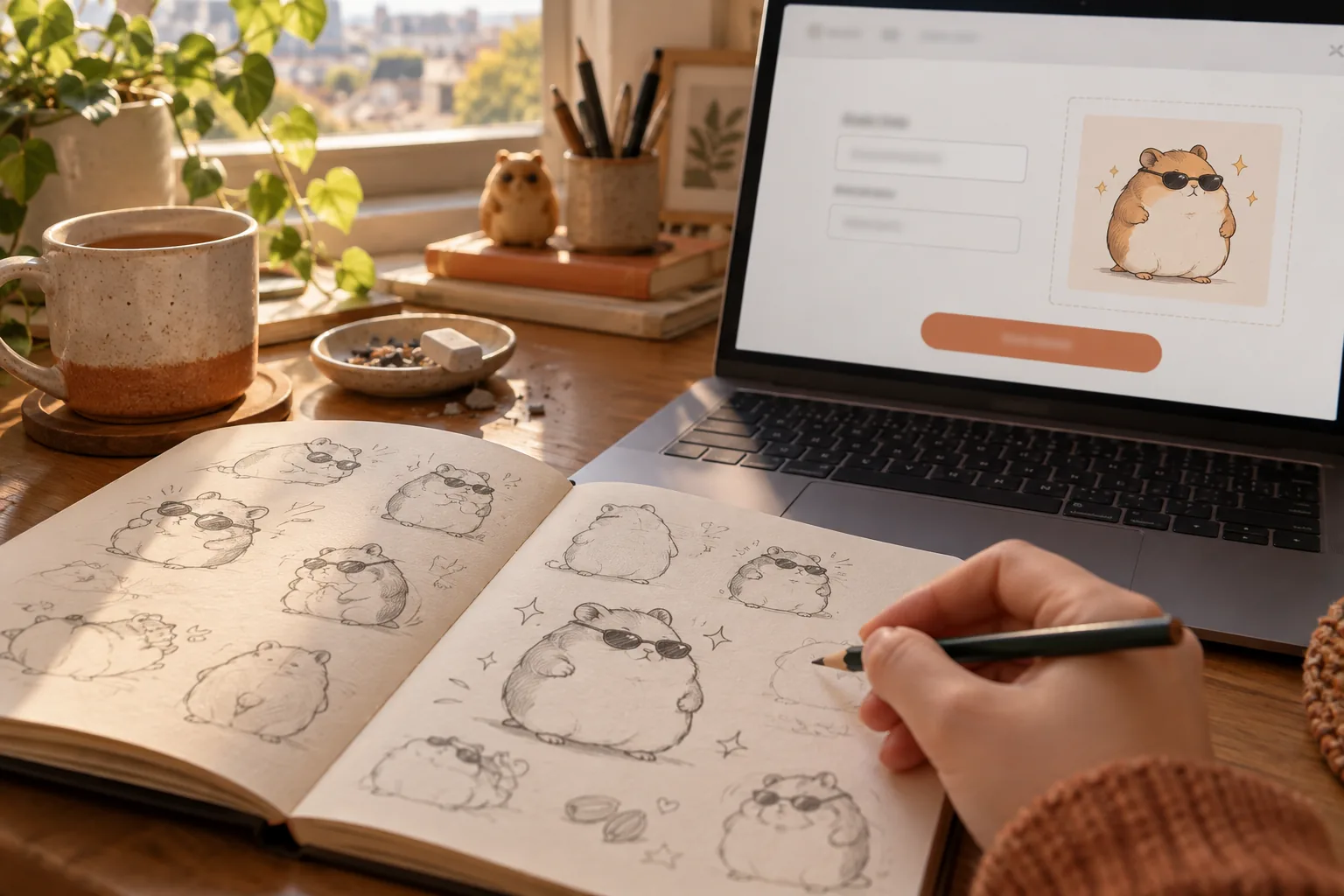
To create a meme coin on pump.fun, you connect a Solana wallet, press Create, fill in a name, ticker, description and image, and sign one transaction. The coin exists as soon as that transaction lands. Every pump.fun coin gets a fixed supply of one billion tokens with six decimals.
- Get a Solana wallet such as Phantom, Solflare or Backpack, or use pump.fun’s email login.
- Put a little SOL in it. How much mostly depends on whether you want a first buy.
- Open pump.fun, connect the wallet and press Create (older guides say “Start New Coin”).
- Enter the name, ticker, description and image. Social links are optional.
- Decide on a first buy, or skip it.
- Check the total in your wallet and approve.
The ticker is the short symbol shown next to prices, such as DOGE. Pump.fun’s official GitHub sets the limits. A name can be up to 32 characters and a ticker up to 13. Metadata is the name, ticker, image and links attached to a token.
| Field on pump.fun | Limit or default | Can you change it later? |
|---|---|---|
| Name and ticker | Up to 32 and 13 characters | No official way to edit |
| Description, image, socials | Your choice | No official way to edit |
| Supply | 1 billion tokens, 6 decimals | Fixed |
| Pair | SOL by default, or USDC, or another pump.fun coin | Set at creation |
| Holder rewards | Off unless you turn it on | Sends creator fees to holders for good |
| Mayhem mode | Off by default | Coin page warns “All held tokens will be burned” |
Can you change or delete the coin later? Pump.fun’s official docs describe no way to delete a coin or edit its name or image. It is safest to treat whatever you set at creation as permanent. When I created a coin with pump.fun’s instruction on devnet, the right to change its name and image was already gone. Hiding a coin in your wallet only hides it from your own screen.
We created the same token three ways on Solana devnet
To see real costs without risking money, I created the same test token three ways on Solana devnet on October 29, 2026. The token was NAKTA TEST with one billion tokens. My practice wallet made no mainnet transactions.
Path A used the classic SPL token plus Metaplex metadata and cost the most. Its extra 0.01 SOL matches Metaplex’s published creation fee. Path B used pump.fun’s own create_v2 instruction and charged no creation fee.
| Created on Solana devnet, October 29, 2026 | Transactions | SOL the creator paid | What it paid for | Mint and freeze authority | Metadata update authority |
|---|---|---|---|---|---|
| A. SPL token + Metaplex metadata | 6 | 0.0163 | Signature fees 0.000035, account deposits 0.006289, Metaplex fee 0.01 | None | Locked in the last transaction |
| A-2. Token-2022 with built-in metadata | 3 | 0.0039 | Signature fees 0.00002, account deposits 0.003856 | None | Still my wallet |
| B. pump.fun create_v2 | 1 | 0.0054 | Signature fee and account deposits, no pump.fun fee | None | None |
All three tokens had no mint authority and no freeze authority. The mint authority is the right to create more tokens. The freeze authority is the right to freeze tokens in someone’s wallet. With both gone, nobody can add supply or freeze holders.
The Token-2022 token still listed my wallet as its metadata update authority, so I could still change its name and image. Giving up the two famous rights left the third one in place. On path A I locked the metadata myself in the last transaction, and pump.fun’s path removed that right on its own.
Devnet is not mainnet. Pump.fun’s devnet curve starts from 0.3 virtual SOL, the starting reserve that sets its price, a hundredth of mainnet’s 30. By our math a devnet curve graduates at about 0.85 SOL. Never read a devnet price or graduation number as a mainnet one. Deposit rates matched mainnet on October 29, 2026. Solana has more cuts planned.
The direct paths follow Solana’s official token docs, which warn that disabling the mint authority fixes the supply for good. I called pump.fun’s program from its official IDL. All three tokens are on the Solana Explorer: path A, path A-2 and path B.
How does the pump.fun bonding curve work, and what is graduation?
A bonding curve is the pricing rule pump.fun uses before a coin has a pool. Each buy pushes the price up and each sell pushes it down. Graduation is the moment the curve’s tokens sell out and the coin moves to a PumpSwap pool. Pump.fun also calls it migration.
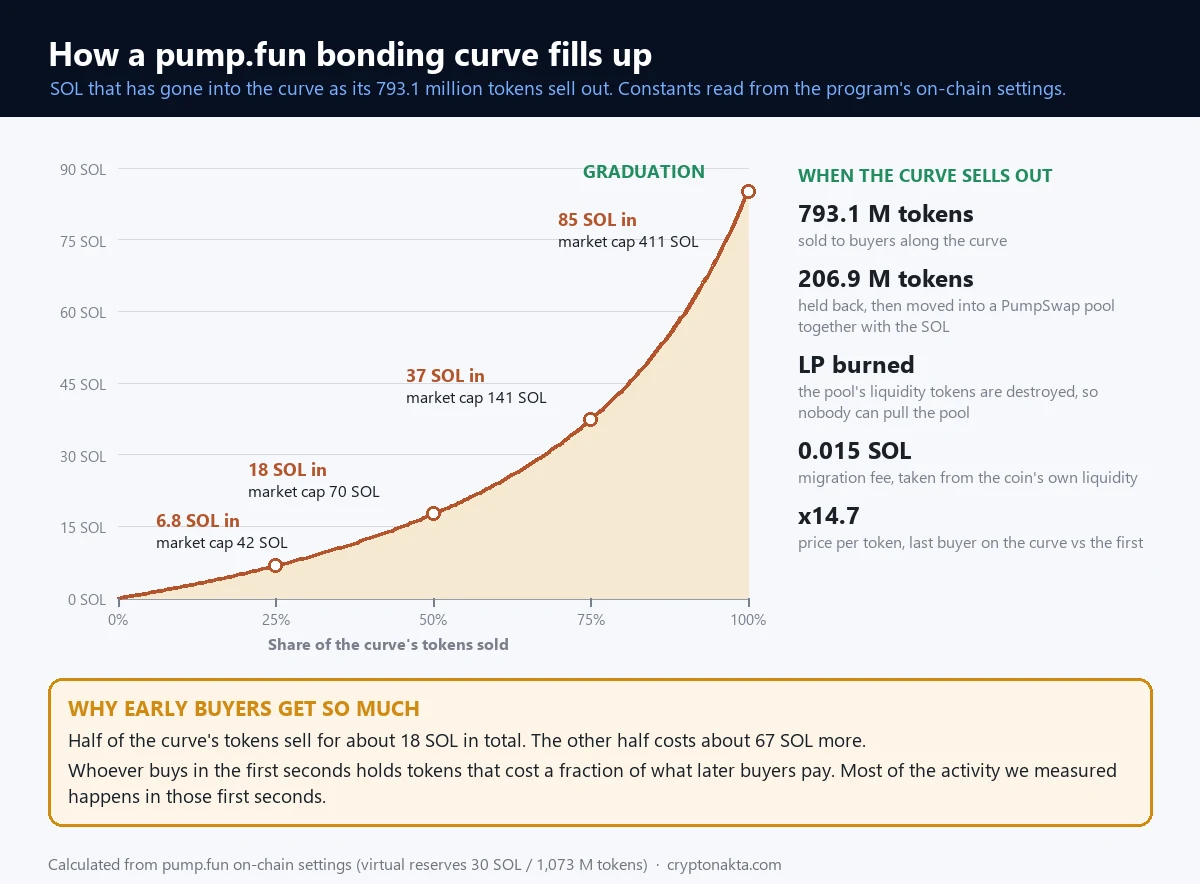
I read pump.fun’s public settings account on Solana directly on October 29, 2026. Of the one billion tokens, 793.1 million are sold on the curve and 206.9 million wait for graduation. The price follows a constant-product formula built on 30 virtual SOL and 1,073 million virtual tokens.
Pump.fun’s docs never state graduation as a SOL amount, so I solved the curve math myself. Selling out the curve brings in about 85 SOL. The market cap is then about 411 SOL, up from about 28 SOL at launch. Here is each quarter, for a coin paired with SOL.
| Share of the curve sold | SOL paid into the curve | Market cap in SOL |
|---|---|---|
| 0% (brand new coin) | 0 | 28 |
| 25% | 6.8 | 42 |
| 50% | 18 | 70 |
| 75% | 37 | 141 |
| 100% (graduation) | 85 | 411 |
 View full size ↗
The curve gets steep near the end. Half of the curve’s tokens sell for about 18 SOL in total. The second half costs about 67 SOL more. The last token on the curve costs about 14.7 times what the first one did. Whoever buys in the first seconds pays a small fraction of what later buyers pay.
At graduation, the held-back tokens and the SOL go into a PumpSwap pool, pump.fun’s own exchange. The pool’s LP tokens are burned. A migration fee of 0.015 SOL comes out of the coin’s own liquidity, so nobody pays it separately.
What is the pump.fun graduation rate? Our one-week count
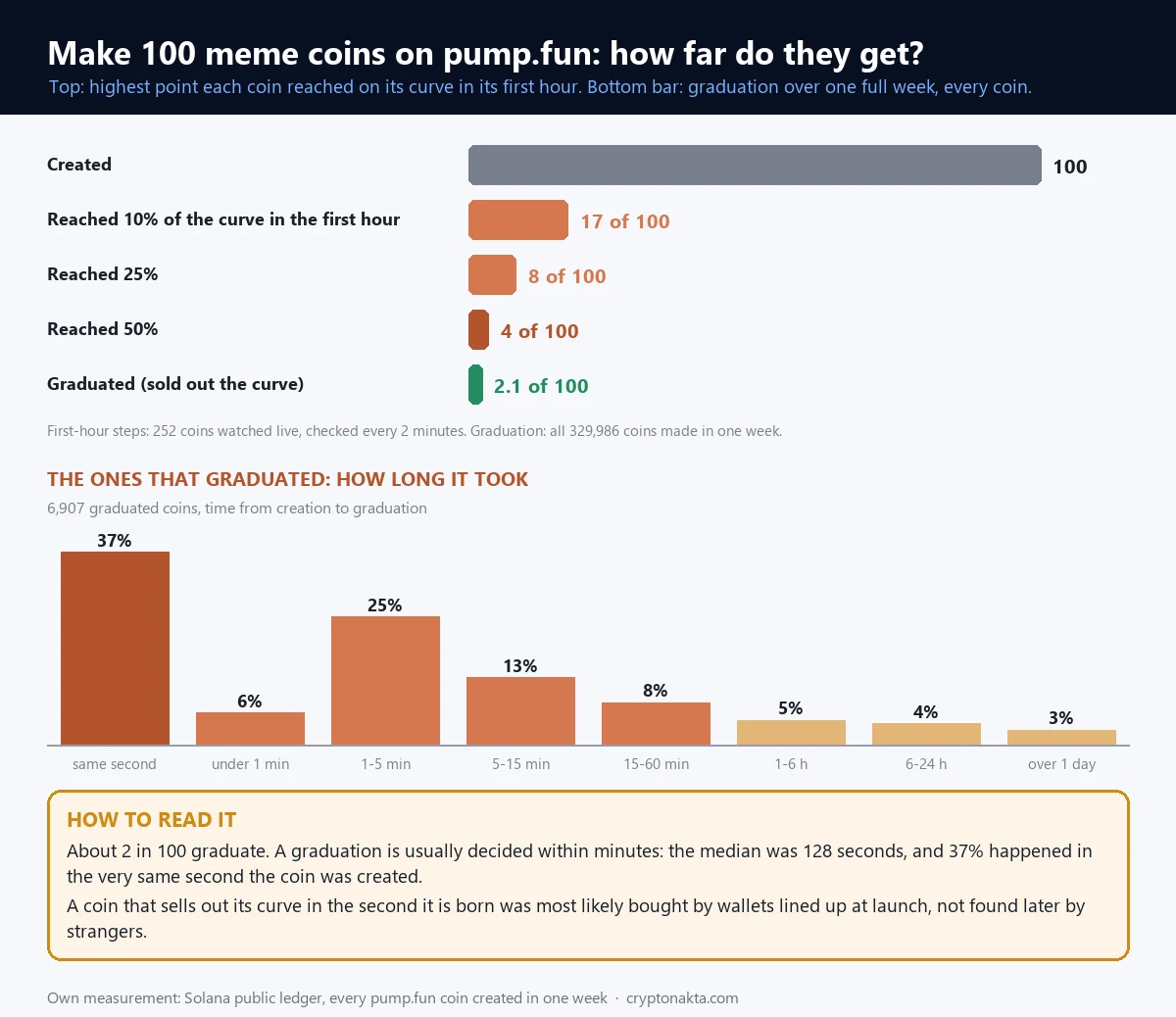
The pump.fun graduation rate in our count was 2.09%, about 2 in every 100. We counted every coin created on pump.fun from October 21 to 27, 2026 (UTC) on the public Solana ledger.
We counted a creation as a successful transaction that uses pump.fun’s mint authority account. A graduation counted only if the migrate call also created a PumpSwap pool, and we opened every one. About 47,141 coins were made per day. These are transactions, so one person who makes ten coins counts ten times.
| pump.fun, coins created October 21 to 27, 2026 (UTC) | Result |
|---|---|
| Coins created per day, average | 47,141 |
| Quietest and busiest day | 40,384 and 54,631 |
| Share that graduated | 2.09% (day by day 1.74% to 2.29%) |
| Share that graduated within 1 hour of creation | 1.85% |
| Share that graduated, leaving out graduations inside 1 minute | 1.19% |
| Median time from creation to graduation | 128 seconds |
| Graduates that graduated in the same second as creation | 37% |
| Graduates that took under 1 hour | 89% |
| Graduates that took over 1 day | 2.8% |
 View full size ↗
The median graduate made it 128 seconds after creation. 37% graduated in the very same second, through separate transactions sent so close together that the timestamps match.
We read those same-second graduations as bundles. A bundle is a set of buys lined up to land together with the creation. That reading is our interpretation, and the measured fact is only that the time difference was zero seconds. Without graduations inside a minute, the rate drops to 1.19%.
We also watched 252 new coins live on October 29, 2026, in two batches starting at 08:52 and 11:00 UTC. We read each curve every two minutes for an hour. Per 100 coins, 17 reached a tenth of the curve in the first hour and 4 got halfway. Most slid back as early buyers sold.
These numbers come from one past week and two hours of one day. A different week or hour can give different results. Other trackers report anywhere from under 1% to almost 7% under other definitions.
What happens to a meme coin after graduation?
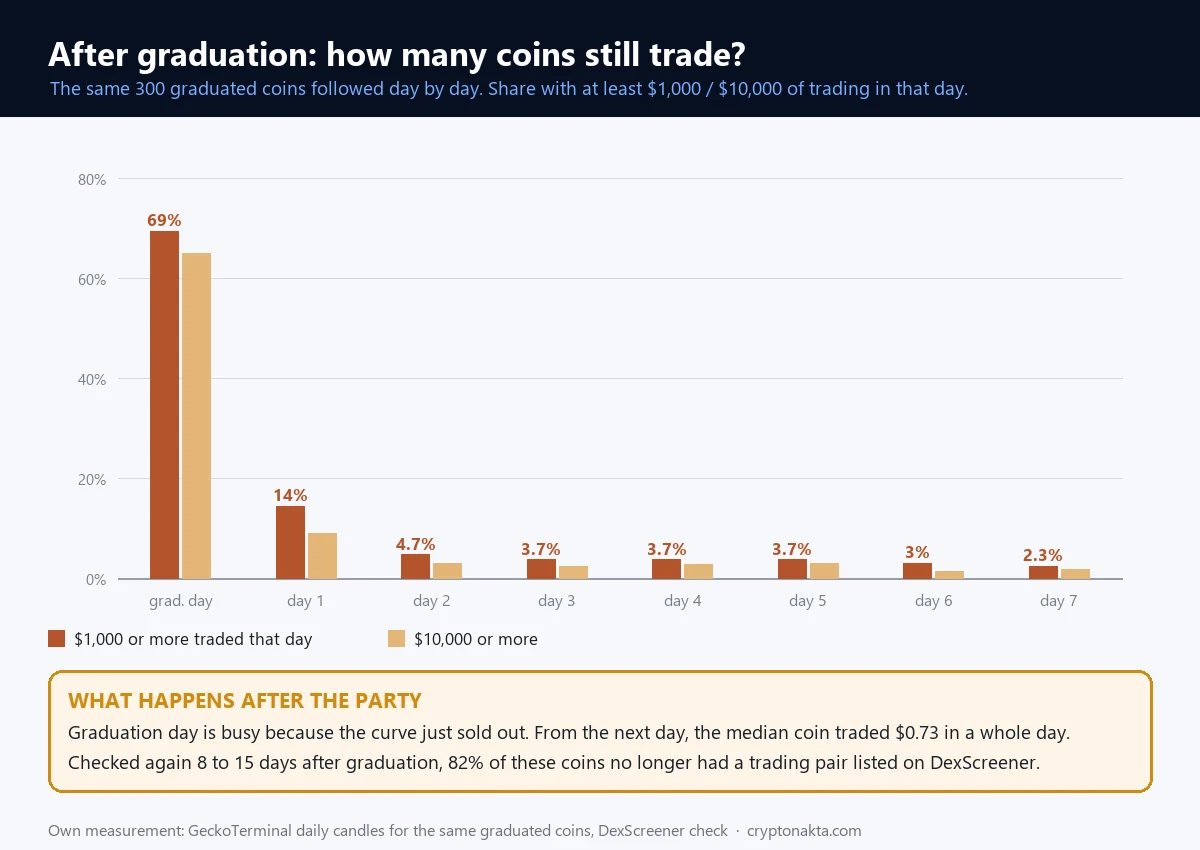
Most pump.fun coins never graduate, and the ones that do usually stop trading within a day or two. We followed 300 coins that graduated from October 14 to 20, 2026. On graduation day 69% traded at least $1,000. The next day only 14% did, and by day seven 2.3%.
 View full size ↗
Graduation day looks busy because the curve has just sold out. On the day after, the median coin traded $0.73 in the whole day. On day three only 3.7% still cleared $1,000. Daily volume came from each coin’s PumpSwap pool on GeckoTerminal, by UTC date.
On October 29 at 05:41 UTC we looked the same coins up again on DEX Screener, 8 to 15 days after graduation. For 82% of them DEX Screener showed no trading pair at all, a sign that trading had dried up. The coins were not deleted, and the tokens still exist on the chain.
CoinGecko found that for most pump.fun tokens, launch day was also the last day anyone traded them. The word graduation sounds like a beginning, yet in our sample it usually marked the busiest day a coin ever had.
How pump.fun fees have changed
Pump.fun’s fees have changed many times, and the numbers in this guide are on-chain values read on October 29, 2026. Older guides that quote a 0.02 SOL creation fee, a 1% curve fee or graduation at $69k describe earlier versions.
- Until about August 2024, creating a coin cost about 0.02 SOL. Then it became free.
- Until about March 2025, curve trades paid 1%. Graduation moved coins to Raydium for a 6 SOL fee, at around a $69k market cap.
- March 20, 2025: PumpSwap launched, and graduations stopped going to Raydium.
- May 12, 2025: creator fees started, at 0.05% back then.
- September 1, 2025: fees started to follow market cap, and the curve fee became 1.25%.
- January 9, 2026: fee sharing and ownership transfer arrived, per news reports.
- February 2026: cashback coins appeared. New ones were later stopped.
The fees we quote come from the FeeConfig account on October 29, 2026. They have changed several times and can change again. Pump.fun’s main settings account still shows a 0.05% creator fee from 2025, and FeeConfig overrides it.
How to check if a meme coin is a rug pull before you buy
To check if a meme coin is a rug pull risk, look at who can still change it and who holds it. A rug pull is when the people behind a coin take out the money or dump their tokens and walk away. Free tools such as Solscan, RugCheck, DEX Screener and Bubblemaps show the warning signs in a few clicks.

| What to check | Why it matters | Where to look |
|---|---|---|
| Mint authority | If it is still set, more tokens can be created | Solscan, RugCheck |
| Freeze authority | If it is still set, tokens in your wallet can be frozen | Solscan, RugCheck |
| Metadata update authority | If it is still set, the name and image can change | Solscan, Solana Explorer |
| LP burned or locked | If neither, the pool money can be pulled | RugCheck, DEX Screener |
| Top holders | A few big wallets can sell into everyone else | Solscan holders tab, Bubblemaps |
| Bundled buys | Many wallets buying in one block from one funding source | Bubblemaps, GMGN |
| Dev wallet | Shows whether the creator still holds or has sold | The coin page, Solscan |
| EVM contract code | Hidden functions can block selling | BscScan |
Some tools flag a coin when the top ten holders own over 30% or the dev wallet, the creator’s own, holds over 5%. Those are vendor habits, not official rules. On EVM chains, a contract that can block sales is called a honeypot.
If you make a coin, paste its address into these tools yourself. What you see is what every buyer sees.
DEX Screener has no listing application. Its docs say every token is listed automatically once it sits in a liquidity pool with at least one trade. Paid extras such as Enhanced Token Info only show your logo and links sooner. Its help center warns that people selling trending spots are scammers. Our guide to crypto scams covers the wider patterns, and our guide on revoking token approvals covers old permissions.
Scams that target people who create meme coins
People who create meme coins are targets too, not only buyers. Fake creator sites, poisoned bots, hacked launch tools and paid listing agents all go after the creator’s private key.
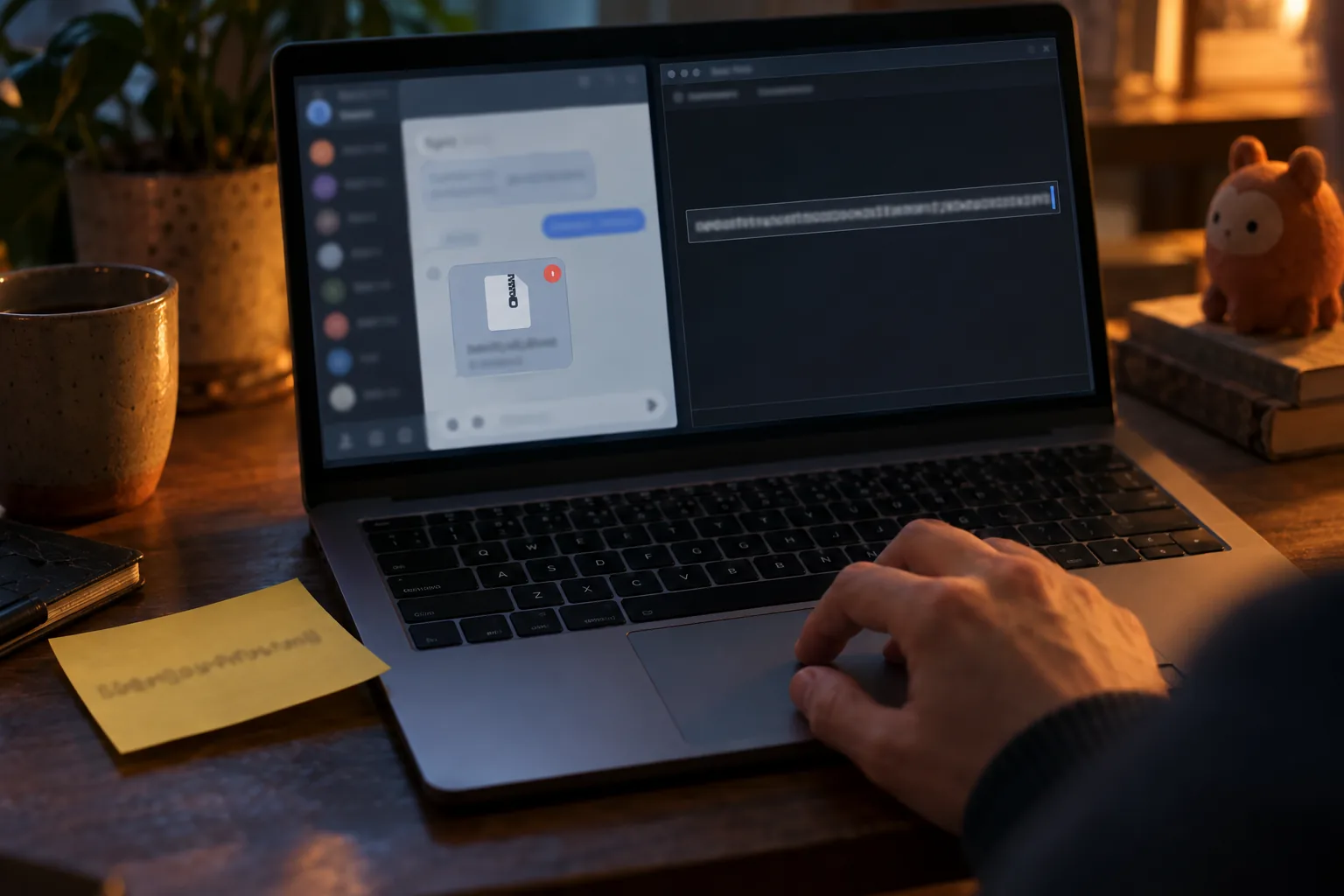
Start with fake token creator sites. A site promises your Solana token in one click and asks you to connect a wallet. Then it asks for signatures that empty it. Google’s threat intelligence team documented a Solana drainer campaign called CLINKSINK with the same pattern.
The GitHub bot case is sneakier. In July 2025, SlowMist analyzed a fake pump.fun trading bot with inflated stars. The main code looked fine. A dependency package scanned local files for wallet keys and sent them to a remote server.
Launch tools have been hit as well. In January 2025, attackers took over the GitHub token of DogWifTools, a tool sold to meme coin launchers. They shipped Windows builds with a remote access trojan that collected private keys and exchange logins. Losses were estimated at about $10 million.
Then come the paid promises. Someone poses as an exchange listing agent, or sells trending spots and holders for an upfront fee. Binance has said it takes listings only through its official form, with no third parties.
Most of these get you to paste a private key, run a file or sign something you did not read. A fresh wallet holding only what the launch needs limits the damage. See our guides on wallet drainers and on what to do if your seed phrase is exposed.
Can you make money creating a meme coin?
You can earn creator fees from a pump.fun coin, though only while people trade it. On October 29, 2026, the on-chain fee settings gave the creator 0.30% of every trade on the bonding curve. Pump.fun took 0.95%, for 1.25% in total.
A creator fee is the cut of each trade that goes to the coin’s creator. Pump.fun’s site calls it creator rewards. After graduation it starts at 0.30%, rises to 0.95% past a 420 SOL market cap, then steps down to 0.05% at the top.
| Where the trade happens (fees in %, read October 29, 2026) | Creator | pump.fun | Liquidity providers | Total |
|---|---|---|---|---|
| Bonding curve | 0.30 | 0.95 | 0 | 1.25 |
| Official PumpSwap pool, market cap under 420 SOL | 0.30 | 0.93 | 0.02 | 1.25 |
| Official PumpSwap pool, from 420 SOL | 0.95 | 0.05 | 0.20 | 1.20 |
| Official PumpSwap pool, from 98,240 SOL | 0.05 | 0.05 | 0.20 | 0.30 |
| Any other PumpSwap pool | 0 | 0.05 | 0.25 | 0.30 |
Now the math. If a coin graduates on buys alone, about 85 SOL passes through the curve. The creator’s 0.30% of that is about 0.26 SOL, by our calculation for the curve part only.
Creator fees build up in two vaults per coin, one for the curve and one for PumpSwap. Pump.fun’s GitHub says a creator typically claims from both, and the SOL only goes to the creator’s wallet.
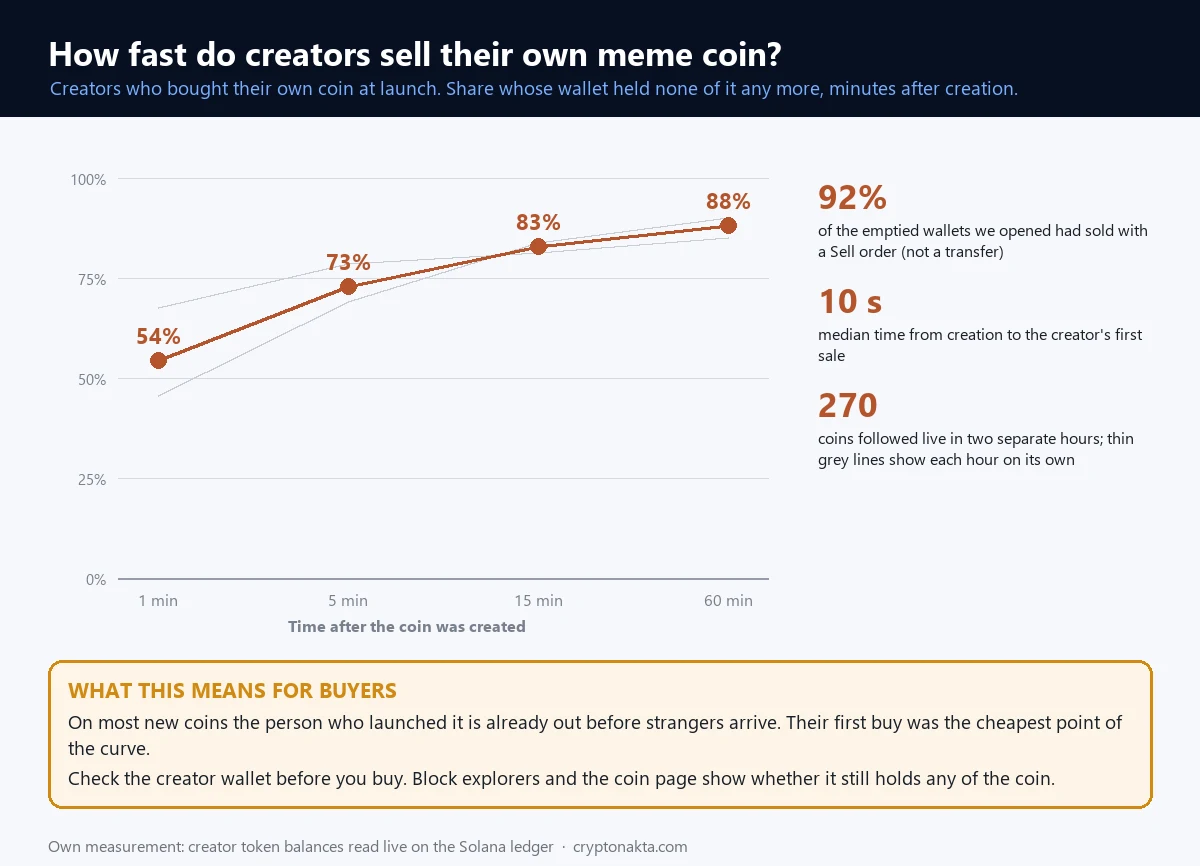
What do creators actually do? We tracked 270 dev wallets live on October 29, 2026, in two batches at 05:00 and 09:00 UTC. Every one had bought its own coin at launch. One minute after creation, 54% held none of it. After an hour, 88% held none.
 View full size ↗
We then opened a sample of the wallets whose balance had dropped by the hour mark. In 92% of them the drop was a real Sell instruction, not a transfer. The median first sale came 10 seconds after creation. We did not measure how much anyone made.
Reports of profitable creators mostly describe wallets that launch coins in bulk, and their profit figures are unaudited estimates. A common claim says pump.fun hands the creator 20% of the supply. It does not, and the creator buys on the curve with everyone else. Making a meme coin does not guarantee you any money, and in our week most coins created never graduated.
Using someone else’s name or meme, and whether it is illegal
Using someone else’s name, character or photo on a meme coin has gone wrong in real cases. Owners have objected and exchanges have been asked to drop names.
- Chill Guy, November 2024. The artist registered his copyright and said he would take down commercial uses. The CHILLGUY token fell 54% within two hours.
- Peanut the Squirrel, December 16, 2024. The owner’s side asked Binance to stop using the PNUT name and mascot.
- Law firm tokens, February 6, 2025. Two law firms in a dispute with pump.fun demanded the removal of hundreds of coins using their names.
- SatoshiStreetBets, July 2022. A token using a community brand’s name drew a preliminary injunction over the trademark.
Is it illegal to make a meme coin? Creating a coin and selling or promoting it are separate questions. Once you raise money or promise returns, different rules can apply depending on where you are. Check the rules for your own area. Buyers have also filed lawsuits against the people who made or promoted coins they bought.
My take on creating a meme coin
My take: creating a meme coin is the easy part, and our numbers show what usually follows. Making one took me about a minute on devnet. Graduation was mostly decided within minutes. Graduation-day volume was mostly gone the next day. More than half of the creators held none of their own coin one minute in.
If you want to try anyway, here is the order I would follow. Make one on devnet first and look at it in Solscan as a buyer would. Use no tool that asks for your private key or seed phrase. Pick a name and picture that are yours. Read the fee table, so you know what a creator earns.
A few things I am least sure about. Pump.fun’s docs list no delete or edit method, and that could change. Calling same-second graduations bundles is our reading. Our live samples cover two hours of one day, and the fees have moved several times.
There is a fair case on the other side. If you make a coin for a community or as an art project, graduation may not be the goal. A small share of graduated coins kept trading past day seven in our sample. And minting directly costs more, but it leaves every setting in your hands.
This site uses affiliate (referral) links, and we earn a commission when you sign up with our code. We set aside part of that commission for you, so 10% of the spot trading fees you pay comes back to you.
Meme coin creation questions people ask
- pump.fun public docs on GitHub · checked 2026-10-29
- pump.fun fees page · checked 2026-10-29
- pump.fun Global settings account · checked 2026-10-29
- pump.fun FeeConfig program · checked 2026-10-29
- Solana token program docs · checked 2026-10-29
- Metaplex protocol fees · checked 2026-10-29
- Raydium docs · checked 2026-10-29
- four.meme · checked 2026-10-29
- BNB Chain docs · checked 2026-10-29
- TON docs · checked 2026-10-29
- DEX Screener docs · checked 2026-10-29
- Binance withdrawal fee data · checked 2026-10-29
Our measurements used free public Solana and BSC nodes plus the DEX Screener and GeckoTerminal APIs. They describe past periods only.
This guide explains how meme coin creation works and what we measured. It is not investment advice. Platforms and fees change, so go by what your own screen shows.
Read next: how to sign up for Binance with our referral code